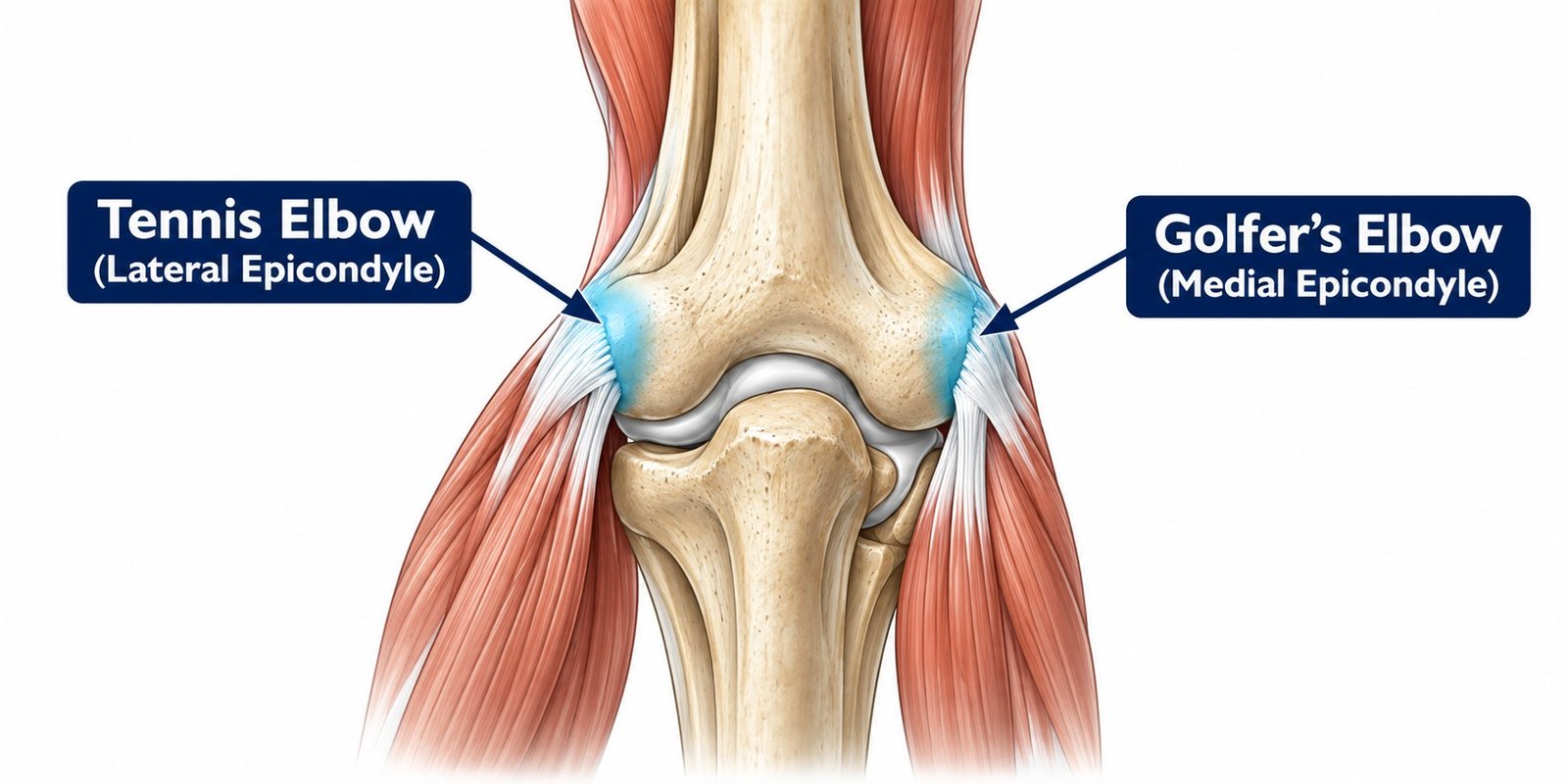
Tennis elbow affects the outer (lateral) tendon attachment; golfer's elbow affects the inner (medial) attachment — the exercises below work for both, just mirrored to the affected side.
Why Exercise Beats Rest
आराम से बेहतर व्यायाम क्यों है
విశ్రాంతి కంటే వ్యాయామం ఎందుకు మేలు
Tendons heal through graded loading, not stillness
- Despite the "-itis" in epicondylitis, most chronic cases are actually tendinosis — small, disorganised tendon changes from repeated overload without enough recovery time
- Rest alone rarely fixes it — because the problem is structural, not purely inflammatory, and complete rest can even let the tendon weaken further
- A graded exercise programme works — controlled stretching plus progressive strengthening asks the tendon to gradually accept more load, helping it remodel and become resilient again
This is why home exercise — not injections or rest alone — is the first-line treatment recommended by most orthopedic and sports medicine guidelines, including the program from the American Academy of Orthopaedic Surgeons (AAOS) that forms the basis of what follows.
Tennis Elbow vs Golfer's Elbow
टेनिस एल्बो बनाम गोल्फर्स एल्बो
టెన్నిస్ ఎల్బో vs గోల్ఫర్స్ ఎల్బో
Same mechanism, opposite side of the elbow
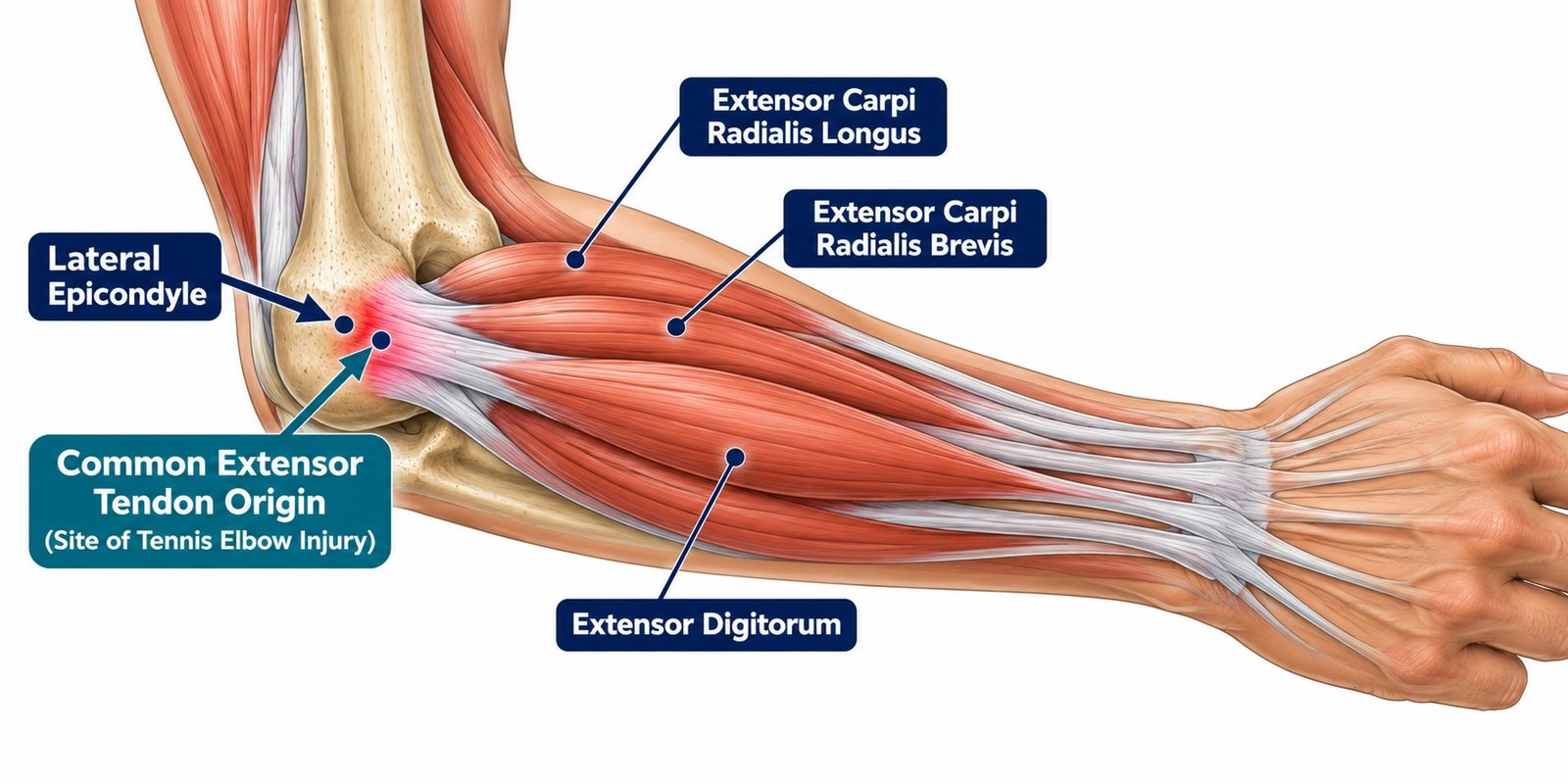
The common extensor tendon origin at the lateral epicondyle — the exact spot the exercises below are working to strengthen.
- Tennis elbow (lateral epicondylitis) affects outer-elbow tendons that extend the wrist and fingers — pain on the outer elbow, often radiating into the forearm, worse with gripping, shaking hands, lifting a cup, or turning a doorknob
- Golfer's elbow (medial epicondylitis) is the mirror image — inner-elbow tendons that flex the wrist and fingers — pain on the inner elbow, worse with gripping and forearm rotation
- Rarely from actual sport — despite the names, both are far more common from repetitive computer/phone use, manual work, and everyday gripping than from tennis or golf
The exercises for both conditions follow the same principle — you simply mirror the direction depending on which side is affected.
When to See a Doctor First
पहले डॉक्टर से कब मिलें
ముందుగా డాక్టర్ను ఎప్పుడు కలవాలి
Most cases are safe to self-manage — but a few signs need evaluation first
See a doctor before starting exercise if you have:
व्यायाम शुरू करने से पहले डॉक्टर से मिलें अगर आपको हो:
వ్యాయామం ప్రారంభించే ముందు ఈ లక్షణాలుంటే డాక్టర్ను కలవండి:
- Numbness, tingling, or weakness spreading into your hand or fingers
- Significant weakness, or you're dropping objects unexpectedly
- Sudden pain after a specific injury, fall, or direct blow to the elbow
- Visible swelling, redness, or warmth around the elbow
- No improvement after 6–12 weeks of a properly followed exercise programme
⚠️ These are uncommon, but when present they point to a different diagnosis — nerve entrapment, a ligament injury, or something else — that needs assessment before continuing exercises.
What The Evidence Shows
सबूत क्या दिखाते हैं
ఆధారాలు ఏమి చూపిస్తాయి
A structured 6–12 week program, not a quick fix
Staged Loading Works
चरणबद्ध भार असर करता है
దశలవారీ భారం పని చేస్తుంది
- A 6–12 week structured program — daily stretching and progressive strengthening, continued as maintenance afterward — is the most widely used protocol for epicondylitis, including AAOS's
- Starts light — elbow bent, forearm supported, keeping the load light and controlled
- Progresses two ways — the elbow gradually straightens (increasing leverage on the tendon), and resistance increases step by step from no weight to 1lb, 2lb, then 3lb
- Only advance once pain-free — move to the next stage only after completing a full set pain-free on two consecutive days
The official guidance is direct about pain: "Do not feel pain during an exercise, however, some degree of discomfort is normal." Sharp or worsening pain is a signal to back off, not push through.
The Full Program
पूरा कार्यक्रम
పూర్తి కార్యక్రమం
Two stretches, three progressive strengthening exercises, and grip work
This program is adapted from the American Academy of Orthopaedic Surgeons (AAOS) protocol. If your pain is on the outer elbow (tennis elbow), the strengthening motions below build the muscles that extend your wrist. If it's on the inner elbow (golfer's elbow), the same exercises still apply — the direction of stretch and load simply mirrors to the opposite side. Do all exercises under Dr. Sumit's supervision if you're unsure which condition you have.
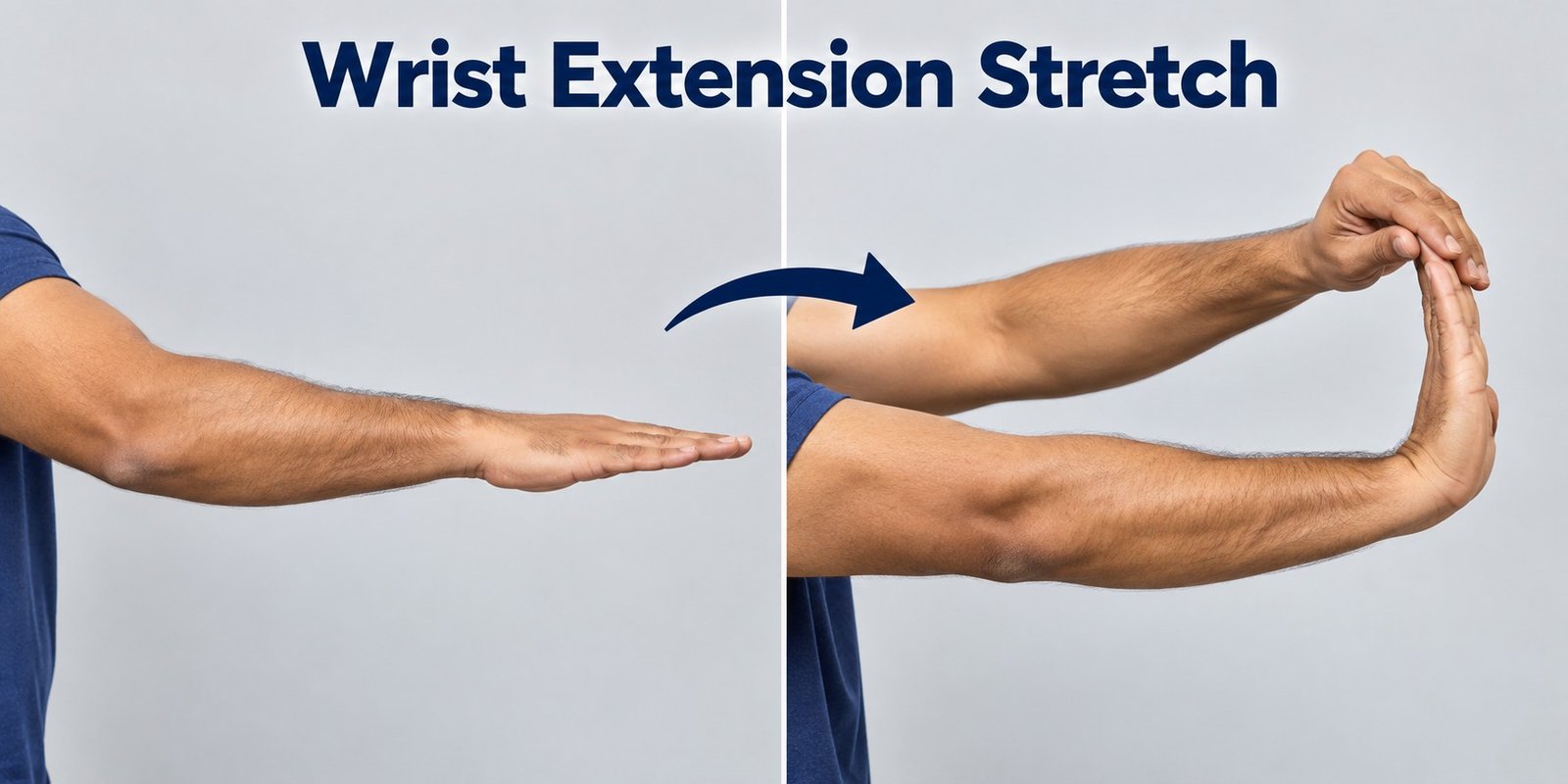
1. Wrist Extension Stretch
1. रिस्ट एक्सटेंशन स्ट्रेच
1. రిస్ట్ ఎక్స్టెన్షన్ స్ట్రెచ్
Straighten your arm and bend your wrist backward, without locking your elbow. Use your opposite hand to apply gentle pressure across the palm, pulling toward you until you feel a stretch along the inner forearm. Hold 15 seconds. Do 5 repetitions, 4 times a day.
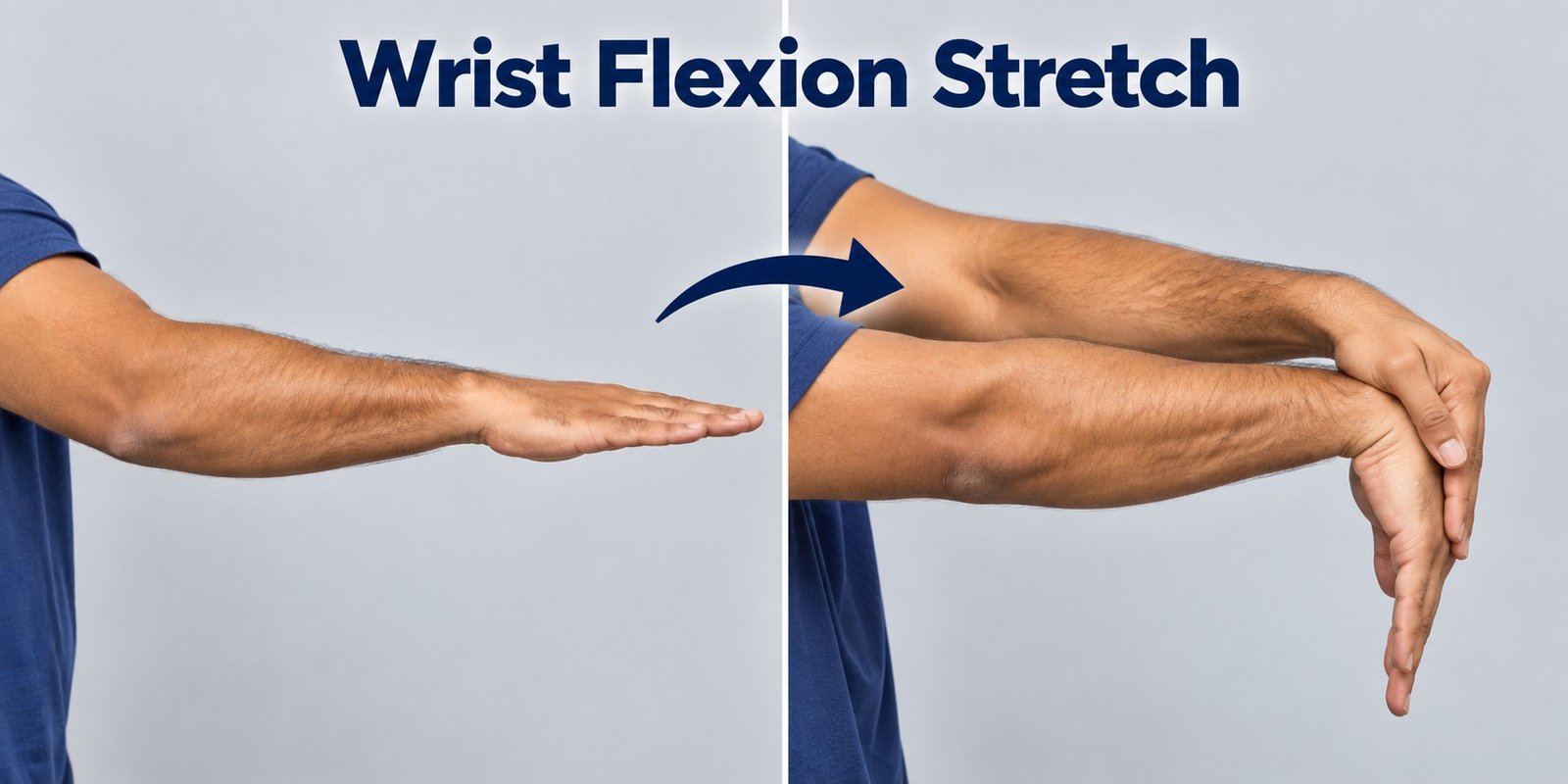
2. Wrist Flexion Stretch
2. रिस्ट फ्लेक्शन स्ट्रेच
2. రిస్ట్ ఫ్లెక్షన్ స్ట్రెచ్
Straighten your arm with your palm facing down, then bend your wrist so your fingers point toward the floor. Gently pull your hand toward your body until you feel a stretch along the outer forearm. Hold 15 seconds. Do 5 repetitions, 4 times a day.
Do both stretches gently — you should feel a pull, never sharp pain, and the elbow should stay soft, not locked straight.
Progressive Strengthening — Three Stages
प्रोग्रेसिव स्ट्रेंथनिंग — तीन चरण
ప్రోగ్రెసివ్ స్ట్రెంగ్తనింగ్ — మూడు దశలు
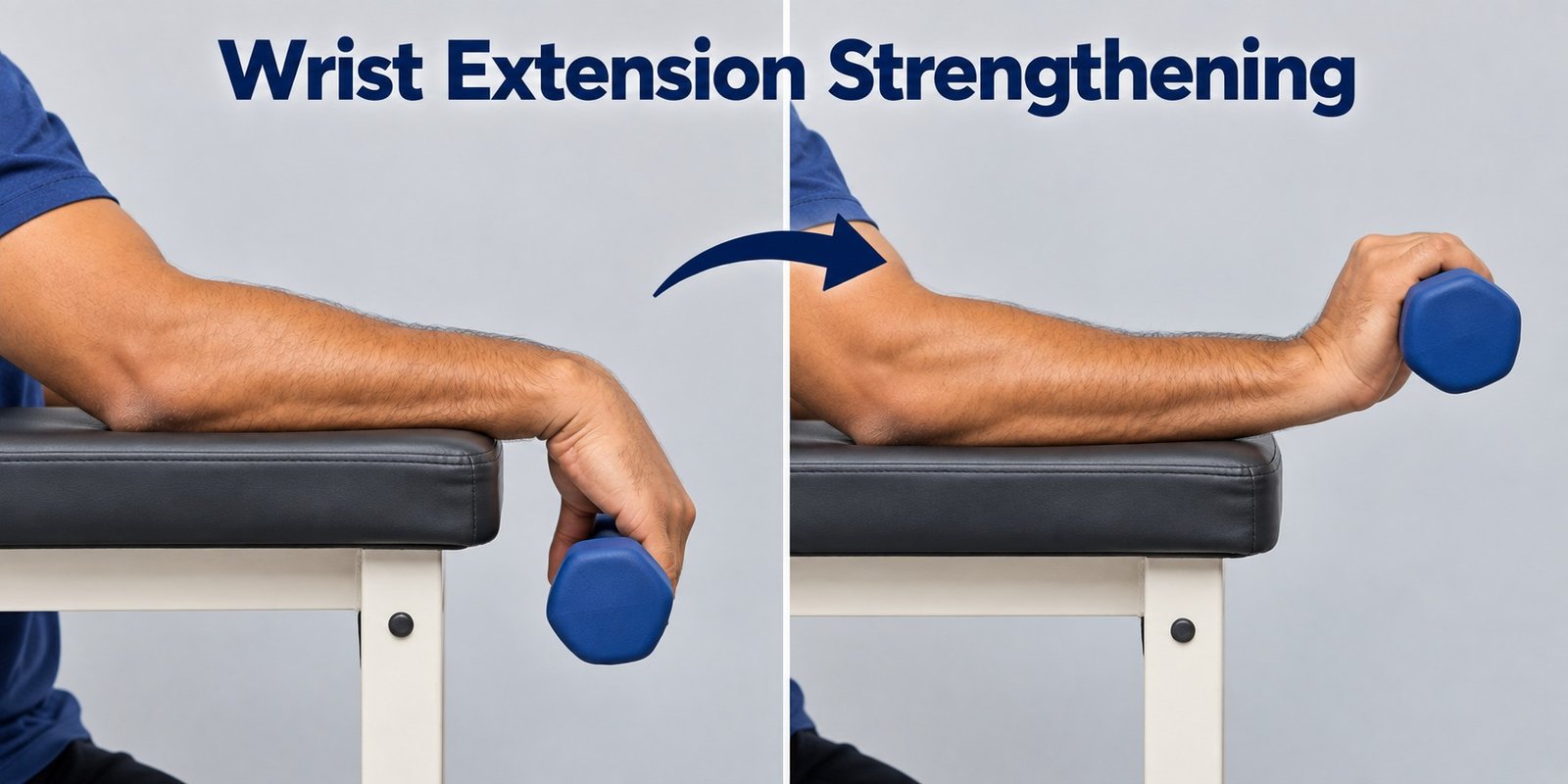
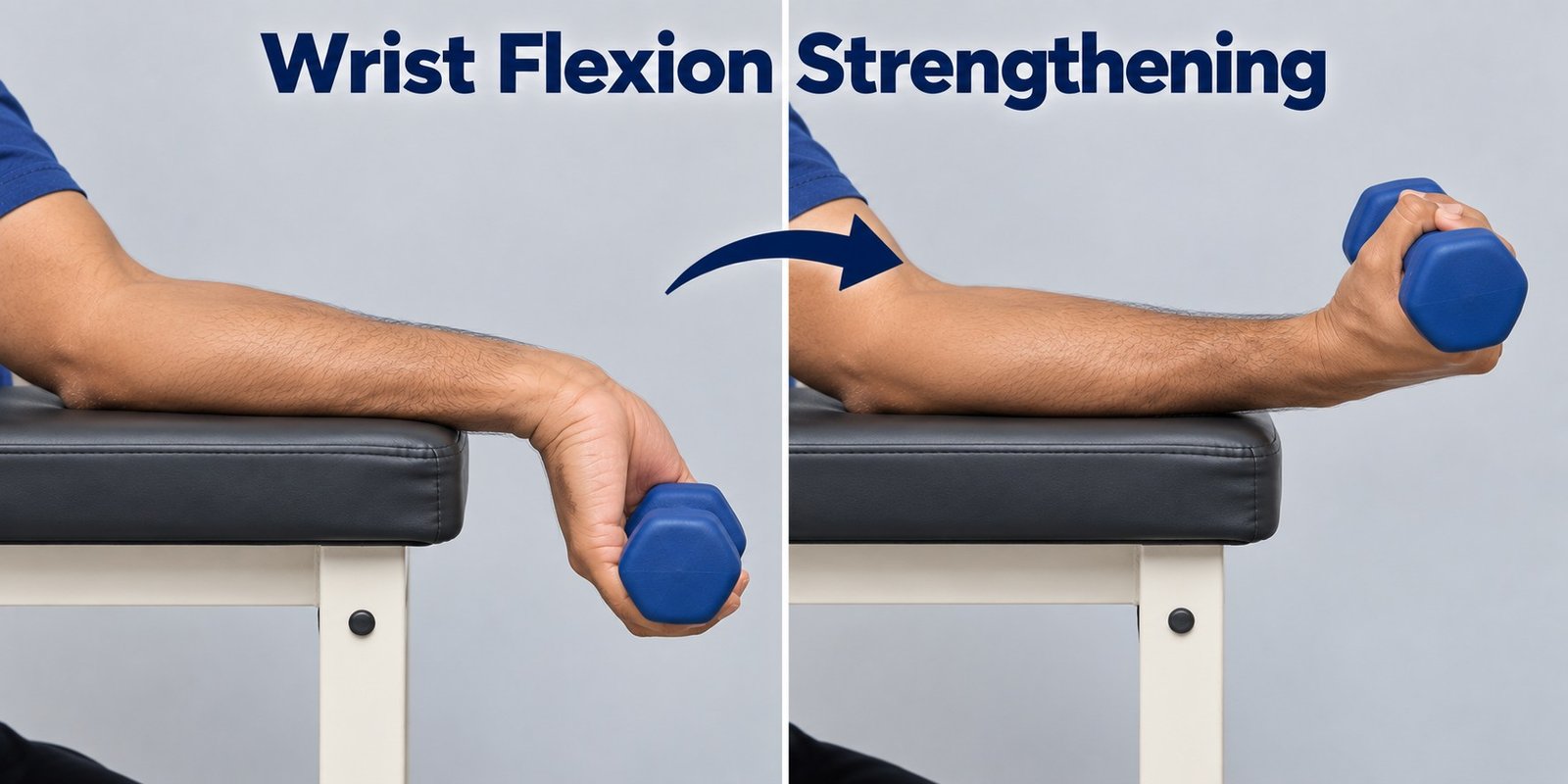
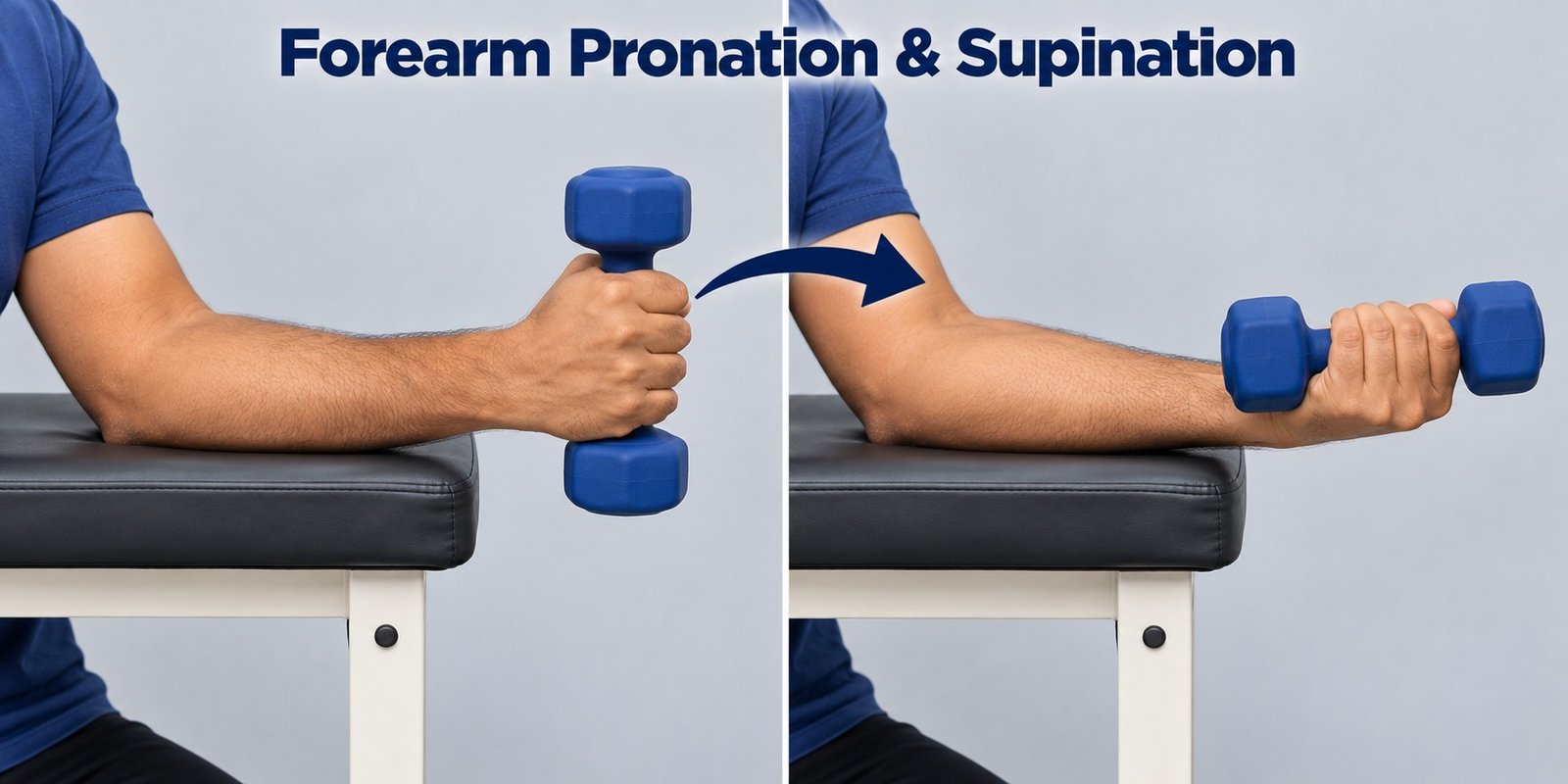
Each of the next three exercises uses the same three-stage progression: Stage 1 — elbow bent 90°, forearm resting on a table. Stage 2 — elbow slightly straightened, arm still supported. Stage 3 — elbow fully straightened, arm lifted off the table. Move to the next stage only once the current one is comfortable.
3. Wrist Extension Strengthening
3. रिस्ट एक्सटेंशन स्ट्रेंथनिंग
3. రిస్ట్ ఎక్స్టెన్షన్ స్ట్రెంగ్తనింగ్
With your palm facing down, bend your wrist upward as far as comfortable. Hold for 1 count, then lower slowly over 3 counts. Start without any weight and work up to 30 repetitions. Once you complete 30 reps pain-free on two consecutive days, add a 1lb dumbbell, then progress to 2lb and finally 3lb the same way. 1 set daily.
4. Wrist Flexion Strengthening
4. रिस्ट फ्लेक्शन स्ट्रेंथनिंग
4. రిస్ట్ ఫ్లెక్షన్ స్ట్రెంగ్తనింగ్
With your palm facing up, bend your wrist upward as far as comfortable. Hold for 1 count, then lower slowly over 3 counts. Follow the same weight and repetition progression as wrist extension — bodyweight to 30 reps, then 1lb, 2lb, 3lb.
5. Forearm Pronation & Supination
5. फोरआर्म प्रोनेशन और सुपिनेशन
5. ఫోర్ఆర్మ్ ప్రొనేషన్ మరియు సుపినేషన్
Start with your palm facing sideways. Slowly rotate your palm upward, return to start, then rotate it downward, and return to start — that's one repetition. Follow the same three-stage and weight progression as the other strengthening exercises. When using a dumbbell, let its weight pull your forearm through the full rotation.
6. Grip & Finger Strengthening
6. ग्रिप और फिंगर स्ट्रेंथनिंग
6. గ్రిప్ మరియు ఫింగర్ స్ట్రెంగ్తనింగ్
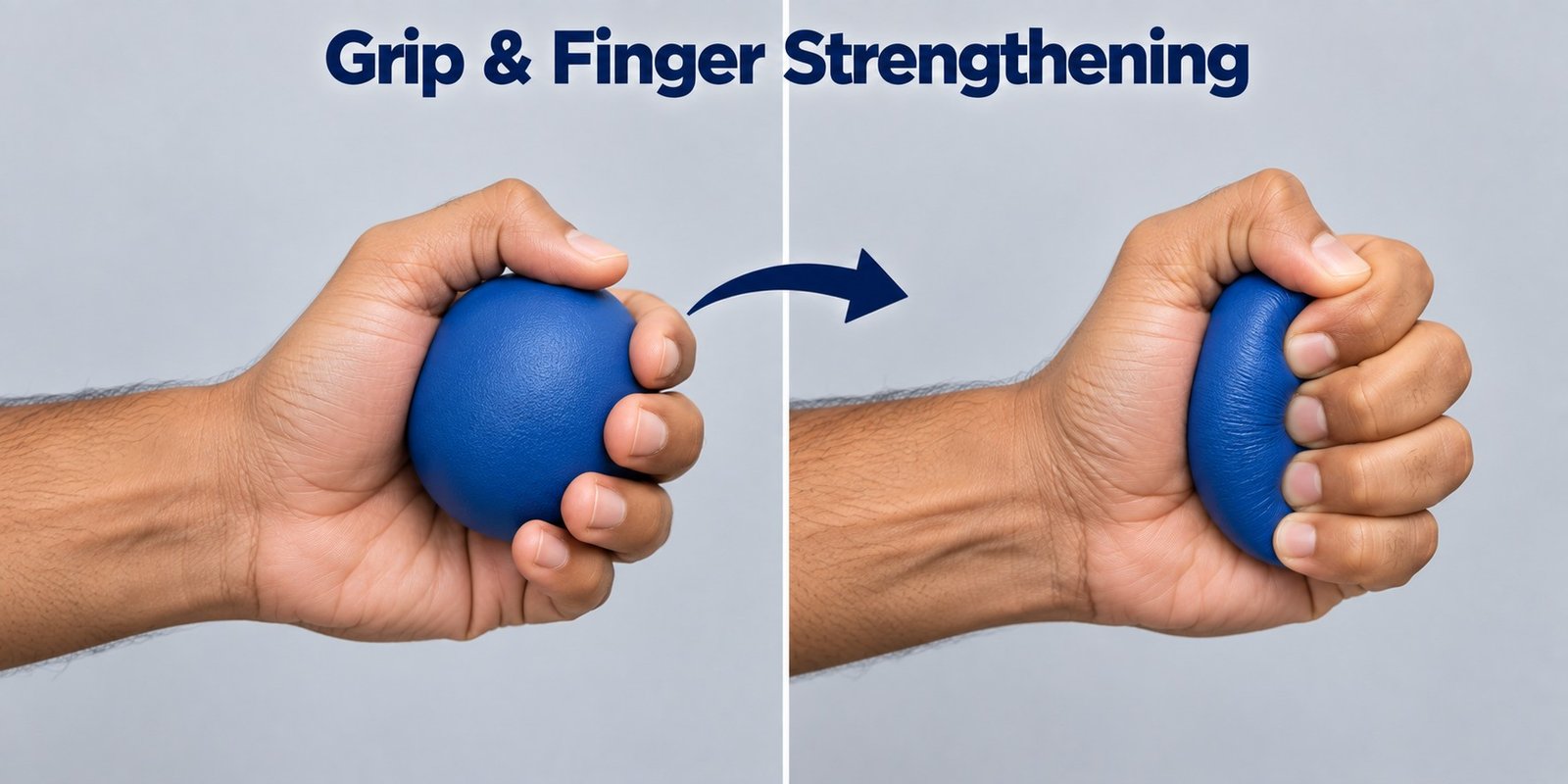
Squeeze a rubber stress ball for 10 repetitions, once a day. Then loop an elastic band around your fingers and thumb and gently spread them apart against the band's resistance for 10 repetitions. Do both after your staged strengthening exercises above, matching the elbow and arm position of your current stage.
| Exercise | Dose |
|---|---|
| Wrist extension / flexion stretch | 5 reps × 4/day, hold 15 sec, 5–7 days/week |
| Wrist extension / flexion strengthening | Up to 30 reps × 1/day, 5–7 days/week |
| Forearm pronation / supination | Up to 30 reps × 1/day, 5–7 days/week |
| Stress ball squeeze & finger stretch | 10 reps × 1/day, 5–7 days/week |
⚠️ Do not lock your elbow during the stretches. Never push into sharp pain — mild discomfort is expected, pain is not. Perform this program under your physician's supervision.
Dr. Sumit's Advice
डॉ. सुमित की सलाह
Dr. సుమిత్ సలహా
The mistake I see most often with this condition
"Most patients try one of two extremes — they either keep straining through the pain because 'it's just a strain,' or they rest completely and expect the elbow to heal on its own. Both delay recovery. Tendons respond to controlled, progressive loading, not to being ignored or overworked. Give the program 6 to 12 weeks, follow the stages in order, and don't skip ahead just because you're impatient — that's usually how a mild case turns into a stubborn one."
— Dr. Sumit Dubewar · DABRM (USA) · Secunderabad
Consultation Information
परामर्श जानकारी
సంప్రదింపు సమాచారం
Dr. Sumit Dubewar consults at ONE Healthcare Clinic, Tirumalagiri, Secunderabad. Phone: +91 9370498182.
Clinic Appointments