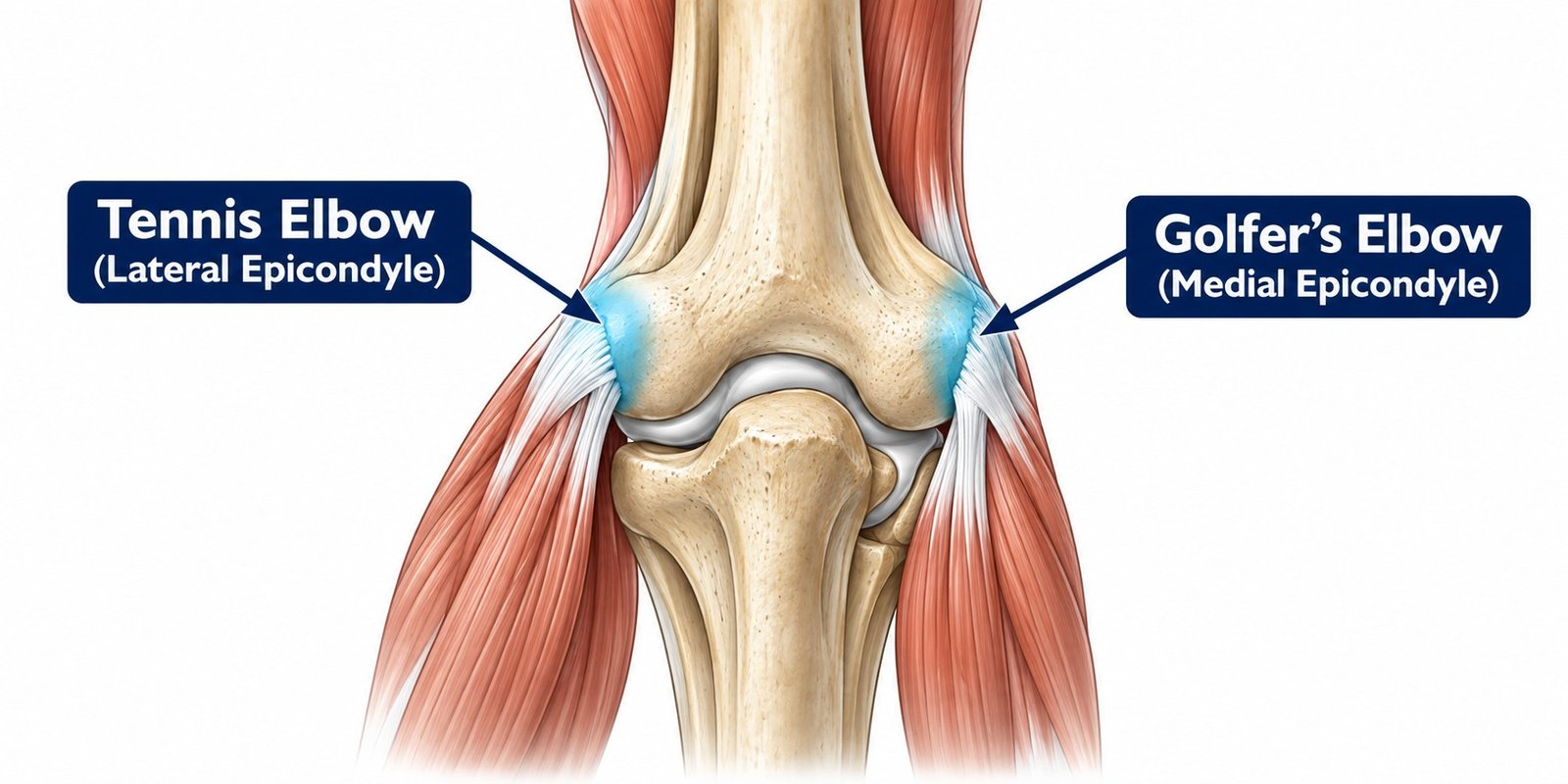
Tennis elbow affects the outer (lateral) tendon attachment; golfer's elbow affects the inner (medial) attachment.
What Causes These Overuse Injuries?
इन ओवरयूज़ चोटों का कारण क्या है?
ఈ అతి వినియోగ గాయాలకు కారణం ఏమిటి?
Understanding lateral and medial epicondylitis
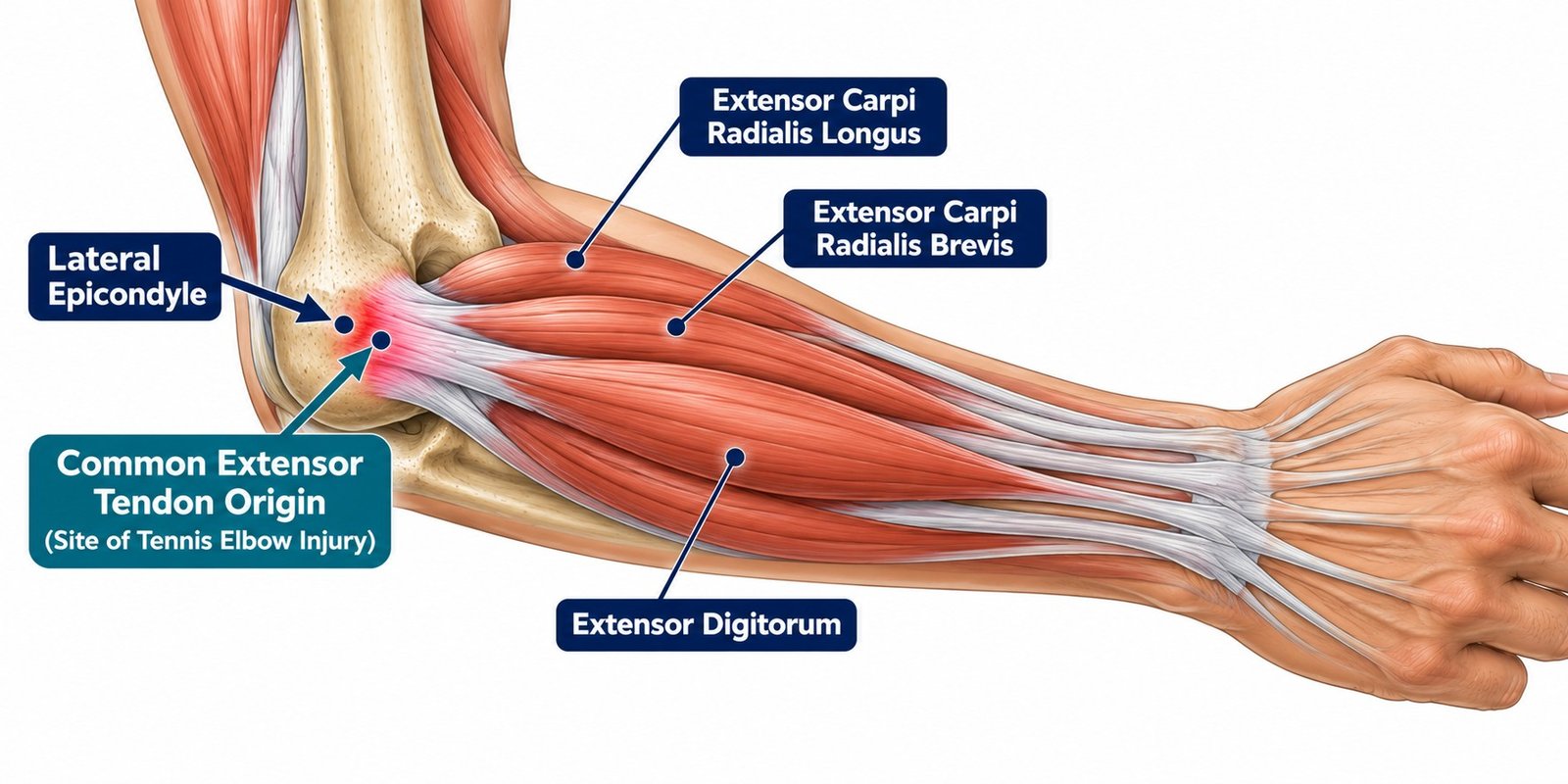
The common extensor tendon origin at the lateral epicondyle — the exact spot that becomes irritated in tennis elbow.
- Repetitive gripping or wrist movements at work — plumbing, carpentry, painting, gardening, or manual labour
- Prolonged computer and mouse use, or repetitive typing — a very common cause today
- Tennis, golf, badminton, and other racquet or throwing sports, especially with poor technique or equipment
- Activities involving repeated lifting, twisting, or gripping of tools — like using a screwdriver or wringing wet cloth
- Age — most common between 35 and 55 years, as tendons lose some of their elasticity and resilience over time
- A sudden increase in activity or taking up an unfamiliar repetitive task without conditioning
Symptoms
लक्षण
లక్షణాలు
Recognizing the signs of tennis and golfer's elbow
- Pain and tenderness over the outer elbow (tennis elbow) or inner elbow (golfer's elbow)
- Pain that worsens with gripping, shaking hands, lifting objects, or twisting motions like turning a doorknob or wringing a cloth
- Weak grip strength — difficulty holding a cup, shaking hands firmly, or opening a jar lid
- Pain that may radiate down the forearm from the elbow
- Mild stiffness in the elbow, often more noticeable first thing in the morning
- Symptoms that tend to flare with activity and settle with rest
Seek prompt medical attention if: pain follows a fall or direct injury with sudden severe pain (possible fracture), there is significant swelling, bruising or visible deformity, you notice numbness or tingling in the hand or fingers, you cannot move the elbow at all, or there are signs of infection such as redness, warmth, or fever.
Treatment Options
उपचार के विकल्प
చికిత్స ఎంపికలు
From rest and physiotherapy to PRP and surgery
Conservative Care (First-Line Treatment)
रूढ़िवादी उपचार (प्राथमिक उपचार)
సంప్రదాయ చికిత్స (మొదటి-వరుస చికిత్స)
- Relative rest and activity modification — avoiding or adjusting the specific movements that aggravate the pain
- Ice application during acute flare-ups, 15-20 minutes at a time, several times a day
- Physiotherapy focused on eccentric strengthening exercises — this is the single most effective treatment for long-term recovery
- A counterforce brace or strap worn just below the elbow, which helps offload strain from the tendon during daily activity
- Short courses of anti-inflammatory medication to help manage acute flare-ups
- Ergonomic adjustments — correcting mouse/keyboard set-up at work, or the grip size on a racquet or tool
If Conservative Treatment Fails
जब रूढ़िवादी उपचार असफल हो जाए
సంప్రదాయ చికిత్స విఫలమైతే
- If symptoms persist despite several months of physiotherapy, a PRP (Platelet-Rich Plasma) injection is a reasonable option. PRP uses concentrated growth factors from the patient's own blood to support natural healing, as a step before considering surgery. Not needed for mild cases already improving with physiotherapy.
- Corticosteroid injections may relieve pain short-term but are used cautiously, as repeated use can weaken the tendon further
Surgical Options (Rare)
सर्जिकल विकल्प (दुर्लभ)
శస్త్రచికిత్స ఎంపికలు (అరుదైనవి)
- Surgery is considered only for chronic cases that have failed 6 to 12 months of comprehensive conservative treatment
- The procedure involves removing damaged, degenerated tendon tissue and repairing the healthy tendon
- The large majority of patients recover very well without ever needing surgery
The vast majority of tennis elbow and golfer's elbow cases heal completely with rest, structured physiotherapy, and time — surgery is rarely required.
Exercises
व्यायाम
వ్యాయామాలు
Strengthening exercises for lasting recovery
A guided, progressive exercise programme — especially eccentric strengthening of the forearm muscles — is the cornerstone of recovery from both conditions.
Tennis & Golfer's Elbow Exercise Program
कोहनी स्ट्रेंथनिंग व्यायाम
మోచేయి స్ట్రెంథెనింగ్ వ్యాయామాలు
Guided exercises to support tendon healing
Dr. Sumit's Advice
डॉ. सुमित की सलाह
Dr. సుమిత్ సలహా
A word from Dr. Sumit
"In my practice, tennis elbow and golfer's elbow are two of the conditions I see patients get most frustrated with — because the pain lingers for months even when nothing seems 'seriously wrong' on a scan. What I tell every patient is the same: these are tendon injuries, and tendons heal slowly, over months, not weeks. The exercises matter more than any injection, and rushing to a needle or the operating table before giving structured physiotherapy a real chance rarely serves the patient well. Patience, combined with the right, consistent exercise programme, resolves the overwhelming majority of these cases. For the small number who genuinely don't respond after months of honest effort, options like PRP exist — but they're a next step, not a shortcut."
— Dr. Sumit Dubewar · DABRM (USA) · Secunderabad
Consultation Information
परामर्श जानकारी
సంప్రదింపు సమాచారం
Dr. Sumit Dubewar consults at ONE Healthcare Clinic, Tirumalagiri, Secunderabad. Phone: +91 9370498182.
Clinic Appointments