Why Endurance Beats Strength
सहनशक्ति ताकत से ज़्यादा क्यों मायने रखती है
బలం కంటే ఓర్పు ఎందుకు ముఖ్యం
The strongest predictor of recurring back pain isn't weakness
Most people assume back pain comes from a weak core, so they chase maximum strength — heavier deadlifts, more crunches. But the research points somewhere else: poor endurance of the trunk muscles, how long they can hold a stabilising contraction, is a more consistent predictor of recurring low back pain than low maximum strength.
In other words, it's not about how much weight your back can move once. It's about whether the muscles around your spine can hold a steady, low-level contraction for minutes at a time — the way they need to when you sit at a desk, stand in a queue, or carry groceries.
This is why the rehabilitation approach many spine specialists use — built around three specific exercises, sometimes called the "Big 3" — trains endurance with short, controlled holds rather than maximum-effort reps.
The Posture Myth
मुद्रा से जुड़ा भ्रम
భంగిమ అపోహ
What the research actually says about posture and pain
"Sit up straight" is common advice, but the evidence for a strong link between static posture and back pain is weaker than most people assume. Slouching occasionally, or having a rounded upper back, does not reliably predict who will develop pain.
What seems to matter more is staying in any one position — good or bad — for too long. Frequent position changes throughout the day appear to matter more than holding a single "correct" posture.
Practically, this means: don't panic about your posture in any single moment. Instead, build in movement breaks — stand up every 30–45 minutes, shift your sitting position, alternate between sitting and standing tasks.
When to See a Doctor First
पहले डॉक्टर से कब मिलें
ముందుగా డాక్టర్ను ఎప్పుడు కలవాలి
Most back pain is mechanical and safe to exercise through — but not always
Before starting any back exercise routine, it's worth knowing when pain needs a proper evaluation instead of a home program.
See a Doctor Before Starting Exercise If You Have:
व्यायाम शुरू करने से पहले डॉक्टर से मिलें अगर आपको हो:
వ్యాయామం ప్రారంభించే ముందు ఈ లక్షణాలుంటే డాక్టర్ను కలవండి:
- Numbness or tingling in the groin area, or changes in bladder or bowel control
- Pain that radiates down the leg, especially below the knee
- Fever or unexplained weight loss alongside the back pain
- Severe, constant pain, or pain following a significant injury or fall
⚠️ These are not common, but when present they need medical evaluation before any exercise programme — not after.
What The Evidence Shows
सबूत क्या दिखाते हैं
ఆధారాలు ఏమి చూపిస్తాయి
Staying active helps more than resting
Movement Over Bed Rest
बेड रेस्ट से बेहतर है हलचल
బెడ్ రెస్ట్ కంటే కదలిక మేలు
Guidance from bodies like the NHS and Mayo Clinic is consistent on this point: staying gently active accelerates recovery from an acute episode of back pain more reliably than prolonged bed rest. Complete rest beyond a day or two can actually slow recovery and weaken the muscles further.
This doesn't mean pushing through sharp pain. It means continuing to move — walking, gentle stretching, daily activities — rather than stopping everything until the pain fully resolves.
The honest takeaway: for most non-specific low back pain, staying active and building trunk endurance matters more than finding one perfect posture or one magic exercise.
The Big 3 + Pulling Power
बिग 3 + पुलिंग पावर
బిగ్ 3 + పుల్లింగ్ పవర్
Endurance-based core stability, plus the movement patterns your back needs
These three exercises are performed with short holds (about 8 seconds) and multiple repetitions, stopping before fatigue — the goal is endurance, not maximum effort.
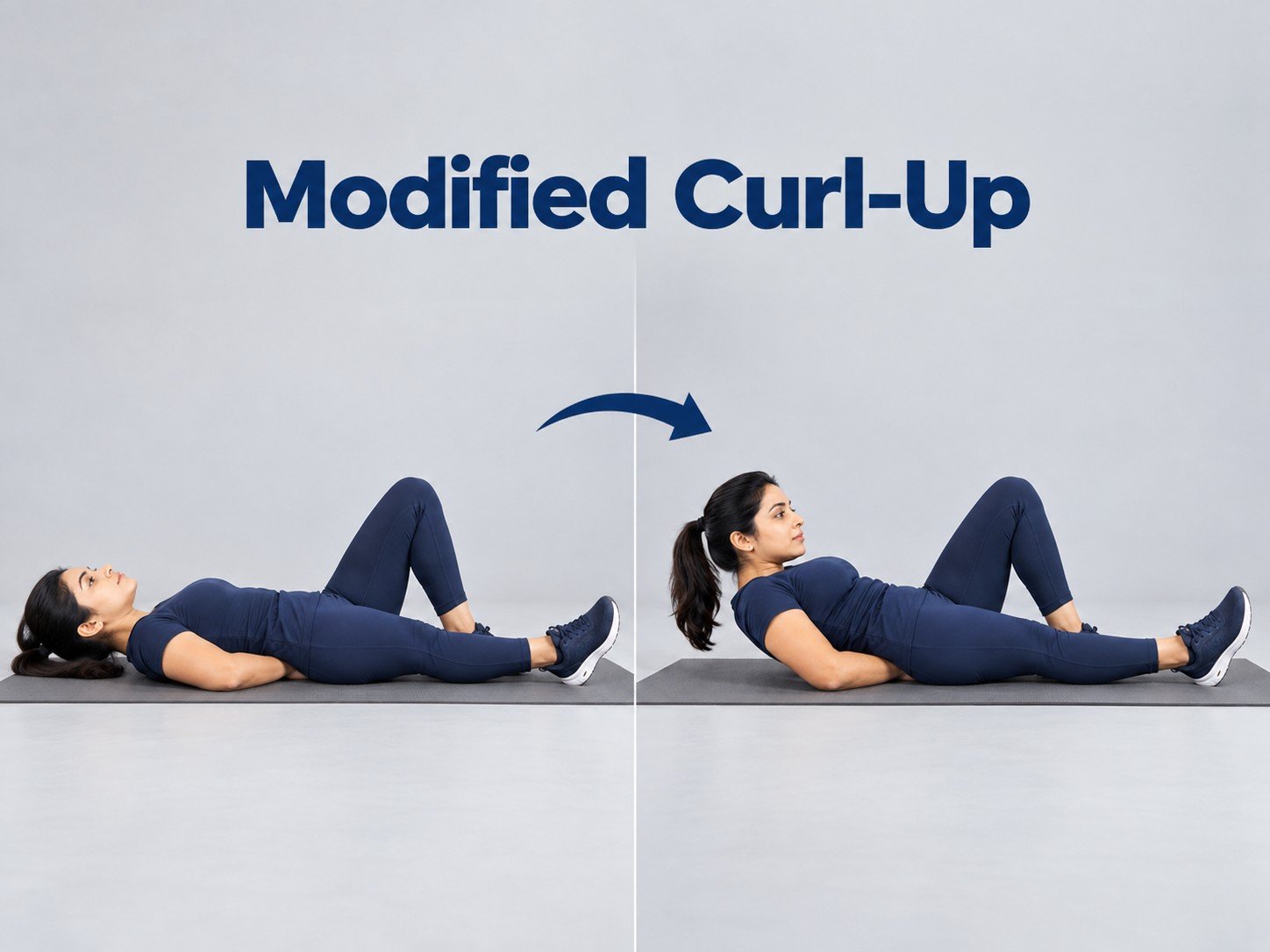
1. Modified Curl-Up
1. मॉडिफाइड कर्ल-अप
1. మోడిఫైడ్ కర్ల్-అప్
Lie on your back with one knee bent and foot flat, the other leg straight. Place your hands under your lower back for support. Lift your head and shoulders slightly off the ground — just enough to engage your abdominals — keeping your lower back flat against your hands. Hold briefly, then lower. This trains the front of your trunk without the repeated spinal flexion of a full sit-up.
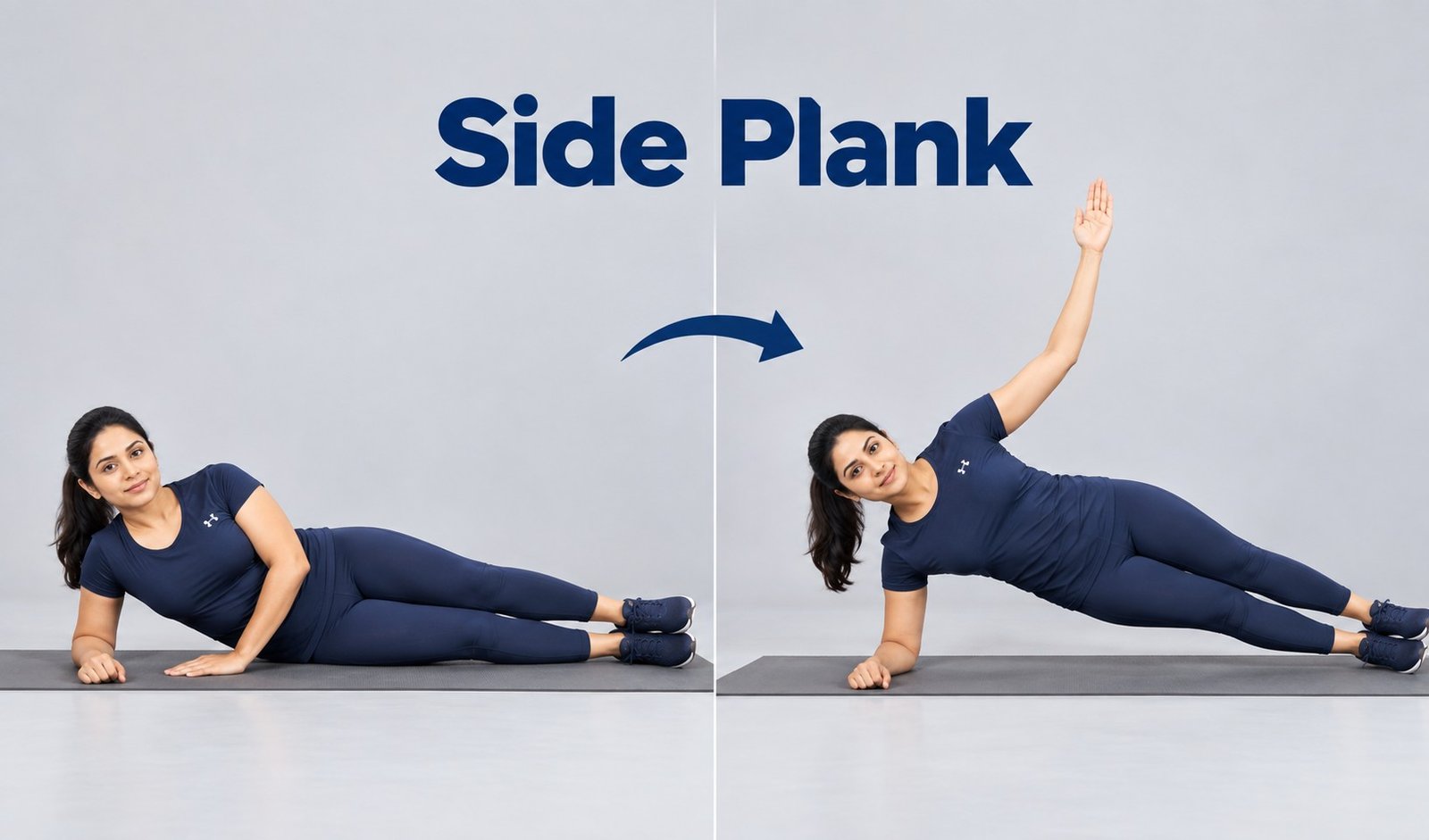
2. Side Plank
2. साइड प्लैंक
2. సైడ్ ప్లాంక్
Lie on your side, propped up on your forearm with your elbow under your shoulder. Lift your hips off the ground so your body forms a straight line from shoulders to feet (or bend your knees for an easier version). Hold, keeping your hips lifted and core engaged. This targets the muscles along the side of your trunk that resist sideways collapse.
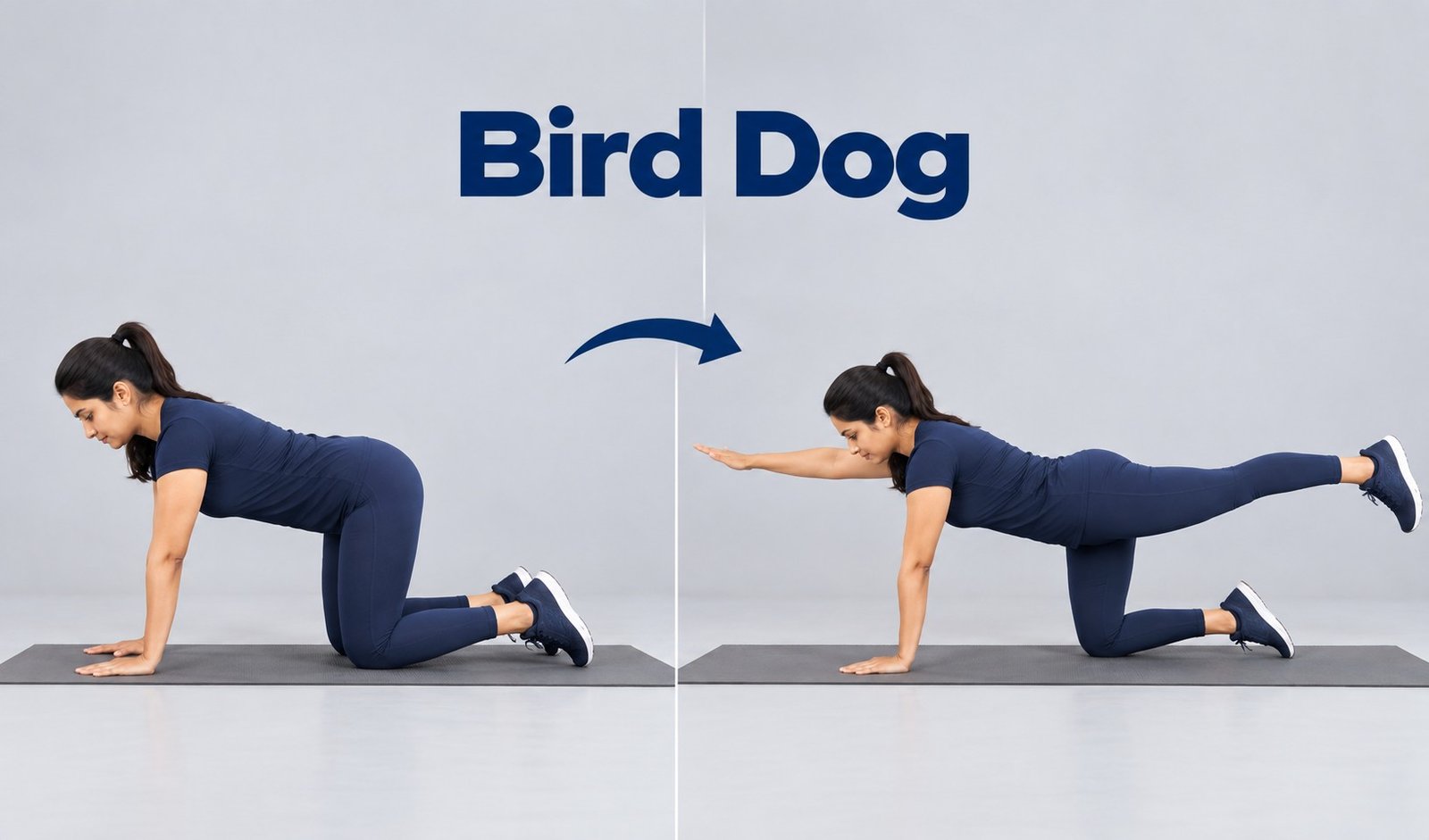
3. Bird Dog
3. बर्ड डॉग
3. బర్డ్ డాగ్
Start on your hands and knees. Extend one arm straight forward and the opposite leg straight back at the same time, keeping your back flat and hips level — avoid letting your torso twist or sag. Hold briefly, then return and switch sides. This teaches your back and hip muscles to stabilise your spine while it moves.
For all three: hold about 8 seconds, repeat 5–8 times each side, stopping well before you feel fatigued. Build up gradually over weeks.
Three Movement Patterns Your Back Also Needs
तीन मूवमेंट पैटर्न जिनकी आपकी पीठ को भी ज़रूरत है
మీ వీపుకు అవసరమైన మరో మూడు కదలిక నమూనాలు
Beyond core stability, a genuinely strong back needs three pulling and hinging patterns, ideally trained across the week:
- Horizontal pull (rows) — strengthens the mid-back muscles that counteract slouching
- Vertical pull (pull-ups, lat pulldowns) — builds the lats and upper back
- Hip hinge (deadlift variations, kettlebell deadlifts) — trains you to lift with your hips and legs, not your lower back
A Simple 15-Minute Daily Routine
एक सरल 15 मिनट का रोज़ाना रूटीन
ఒక సాధారణ 15 నిమిషాల రోజువారీ రొటీన్
- Minutes 1–3: Gentle mobility (cat-cow, child's pose)
- Minutes 4–9: The Big 3 (curl-up, side plank, bird dog)
- Minutes 10–14: One pulling pattern, rotated daily
- Minute 15: Band pull-aparts
Dr. Sumit's Advice
डॉ. सुमित की सलाह
Dr. సుమిత్ సలహా
What I tell every patient chasing the "perfect" posture
"Patients come in worried that their posture is destroying their spine, or that they need to find one exercise that fixes everything. Neither is quite right. Your back cares less about how you sit in any one moment and more about whether it gets a break from any one position — and whether the muscles around it can hold steady for longer than a minute. Start with the Big 3, build slowly, and don't wait for pain to force you to move. Move because it's the single most protective thing you can do for your spine."
— Dr. Sumit Dubewar · DABRM (USA) · Secunderabad
Consultation Information
परामर्श जानकारी
సంప్రదింపు సమాచారం
Dr. Sumit Dubewar consults at ONE Healthcare Clinic, Tirumalagiri, Secunderabad. Phone: +91 9370498182.
Clinic Appointments