Why Hips Get Tight
कूल्हे क्यों जकड़ जाते हैं
హిప్స్ ఎందుకు బిగుసుకుపోతాయి
The usual causes — most are lifestyle, not disease
The hip is a deep ball-and-socket joint, surrounded and moved by a large group of muscles — hip flexors in front, glutes and external rotators behind, adductors on the inside. When any of these stay short or weak for long enough, the joint's comfortable range of motion shrinks, and everyday movements start to feel restricted.
- Prolonged sitting — desk jobs and long commutes keep the hip flexors in a shortened position for hours, so they gradually tighten
- Little day-to-day hip range of motion — a generally sedentary routine with minimal squatting, bending, or walking
- Weak glutes and core, which forces the hip flexors and other muscles to overcompensate for stability
- Reduced activity after a previous hip, knee, or back injury
- Age-related stiffness and early joint changes (osteoarthritis), which naturally narrow comfortable range of motion
- Repetitive high hip-flexion sports (running, cycling) without adequate stretching afterward
Symptoms
लक्षण
లక్షణాలు
What tight hips typically feel like
- Stiffness getting up after sitting for a while
- Discomfort or limited range with squatting, tying shoelaces, or getting in and out of a car
- A feeling of tightness in the front of the hip or groin
- A clicking or catching sensation deep in the hip with certain movements
- Reduced flexibility compared to before, without necessarily any pain
- Compensatory low back or knee discomfort from altered movement patterns
See a doctor before starting any hip-stretching routine if: you have sudden severe hip pain or can't bear weight (especially after a fall in an older adult — possible fracture); hip pain with fever or feeling generally unwell (possible joint infection); constant pain that wakes you at night regardless of position; groin pain that catches, locks, or gives way, especially in a younger active adult (possible labral tear or impingement); or you're still within your surgeon's advised recovery window after a hip replacement or hip surgery.
Get Checked First
पहले जांच करवाएं
ముందుగా చెకప్ చేయించుకోండి
Not every tight hip is safe to stretch aggressively
Before starting any hip-opening routine, it helps to know what's actually going on in the joint — because not every tight hip is safe to stretch aggressively.
What An Evaluation Involves
जांच में क्या शामिल होता है
మూల్యాంకనంలో ఏముంటుంది
- A history of your symptoms and how/when they started
- Hip range-of-motion testing
- Specific tests such as FABER and FADIR to screen for impingement
- X-ray if arthritis or bony changes are suspected
- MRI if a labral tear or soft-tissue problem is suspected and symptoms persist
Two Groups Who Need Extra Caution
दो समूह जिन्हें विशेष सावधानी चाहिए
అదనపు జాగ్రత్త అవసరమైన రెండు గ్రూపులు
- If you've had a hip replacement: your surgeon's precautions — commonly avoiding hip flexion beyond 90°, and avoiding crossing the leg past the midline or turning the foot inward, for roughly 6–12 weeks depending on the surgical approach — override any generic yoga routine. Check with your surgeon before doing hip-opening poses.
- If you have suspected impingement (FAI) or a labral tear: groin pain that catches, locks, or occurs with deep hip flexion combined with rotation is a warning sign. Deep hip-opener poses like full Pigeon can aggravate this — get evaluated before pushing into them.
What The Evidence Actually Shows
रिसर्च वास्तव में क्या दिखाती है
ఆధారాలు నిజంగా ఏమి చూపిస్తాయి
Honest expectations from the research
The Research On Yoga And Hip Movement
योग और कूल्हे की गति पर रिसर्च
యోగా మరియు హిప్ కదలికపై పరిశోధన
The best-quality trial evidence on yoga for arthritis is actually in knee osteoarthritis, not hip. A 2025 randomized trial published in JAMA Network Open compared yoga to standard strengthening exercise in 117 people with knee OA over 24 weeks. Yoga was non-inferior to strengthening for pain reduction, and came out slightly ahead on some secondary measures like function and stiffness, with similarly low rates of mild side effects in both groups. Large dedicated randomized trials specifically testing yoga for hip osteoarthritis are much harder to find — most of what's known about hip OA has been studied with general exercise therapy rather than yoga specifically.
A separate review pooling 18 randomized trials of exercise therapy in hip osteoarthritis (not yoga-specific) found a real but modest effect — pain improved by a small-to-moderate amount right after treatment, and that benefit persisted at 6–9 months. But the authors themselves called the effect "small and not clearly clinically worthwhile" on its own. That doesn't mean movement doesn't help — it means it's one part of managing hip stiffness or early arthritis, not a stand-alone cure.
What This Means Practically
व्यावहारिक रूप से इसका क्या मतलब है
ఆచరణాత్మకంగా దీని అర్థం ఏమిటి
- Gentle, consistent hip mobility work is a reasonable, low-risk habit for most people with ordinary tight hips from sitting
- For diagnosed hip osteoarthritis, exercise (yoga or otherwise) is a genuine part of treatment, but expectations should be realistic — it modestly helps, it doesn't reverse joint changes
- Daily short sessions beat occasional long ones for building actual mobility
- Combine hip stretching with glute and core strengthening — tightness up front is often paired with weakness at the back
The honest takeaway: hip yoga poses are a safe, sensible habit for everyday stiffness, and a modestly helpful piece of the puzzle for hip osteoarthritis — but they work best alongside strength work, not as a replacement for a proper diagnosis when something feels genuinely wrong.
5 Hip-Opening Poses
5 हिप-ओपनिंग पोज़
5 హిప్-ఓపెనింగ్ భంగిమలు
Go slowly — mild stretch is fine, pain is not
These five poses cover the main directions hips need to move in — flexion, external rotation, and gentle opening. Go slowly, breathe, and stop well short of sharp pain: mild stretch discomfort is fine, pain is not.
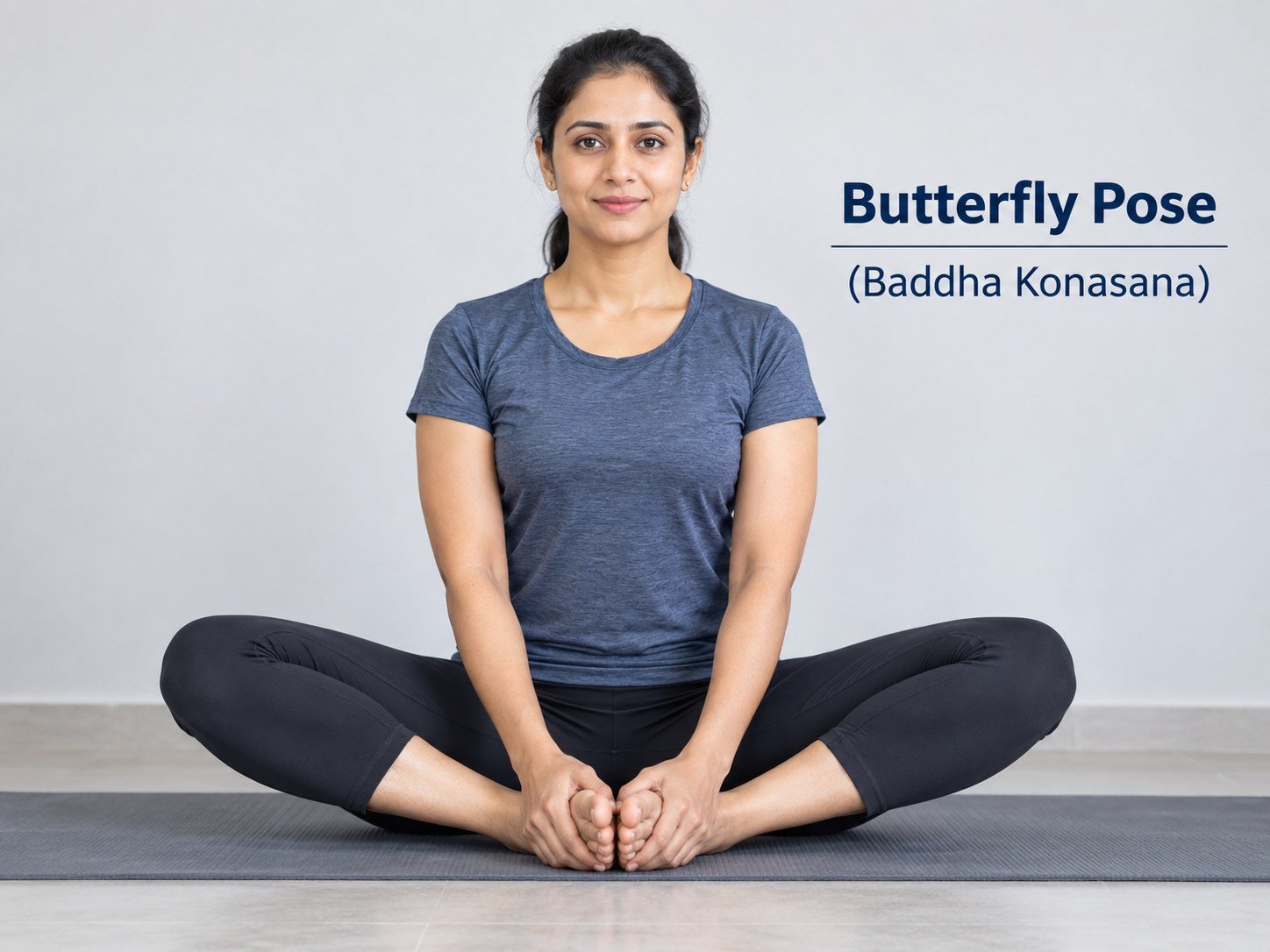
1. Butterfly Pose (Baddha Konasana)
1. बटरफ्लाई पोज़ (बद्ध कोणासन)
1. బటర్ఫ్లై భంగిమ (బద్ధ కోణాసనం)
Sit with the soles of your feet together, knees dropping out to the sides. Sit tall rather than rounding your back, and let gravity do the work rather than pressing your knees down. A good starting point for most people, with low risk.
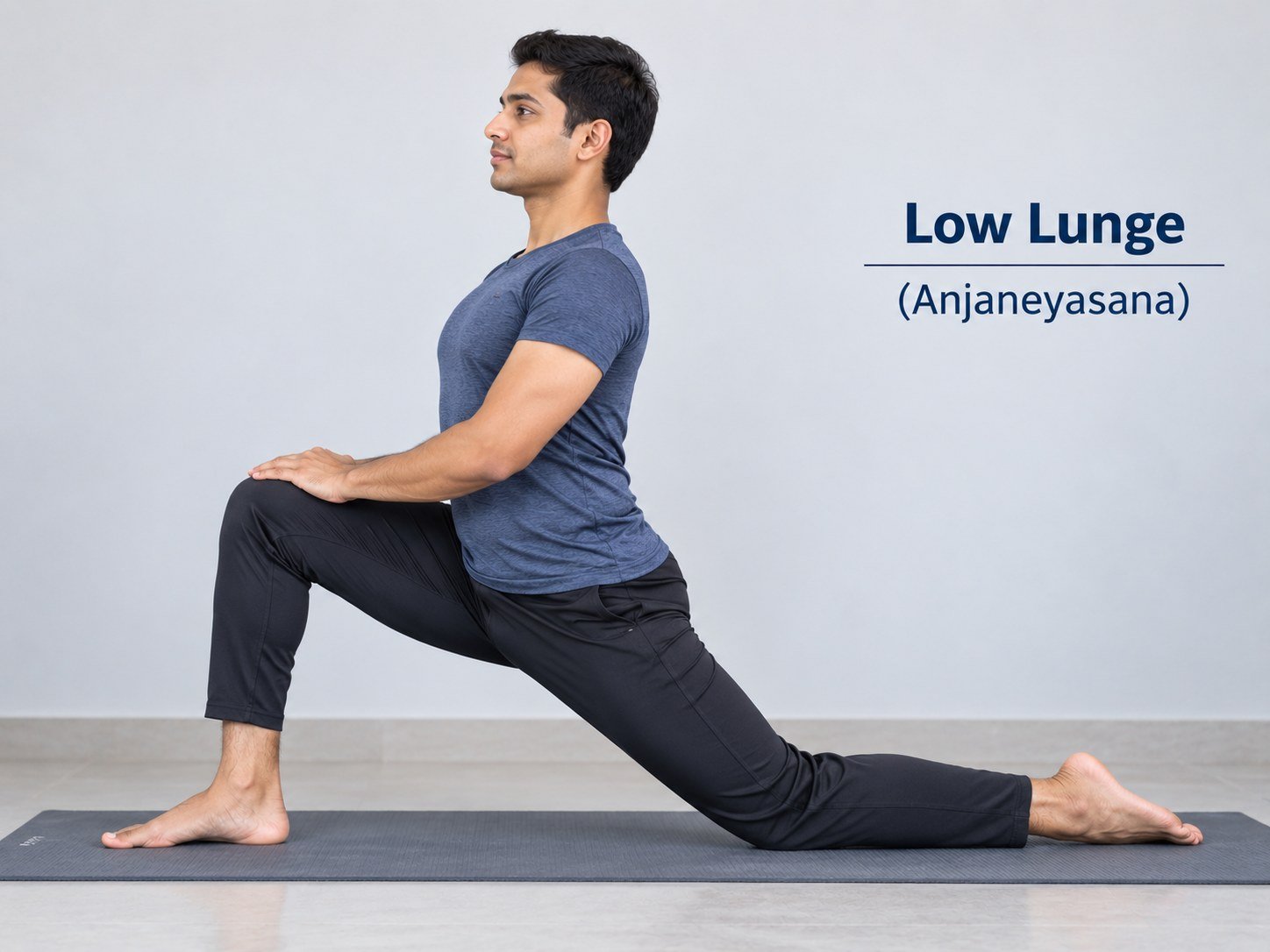
2. Low Lunge (Anjaneyasana)
2. लो लंज (अंजनेयासन)
2. లో లంజ్ (అంజనేయాసనం)
Step one foot forward into a lunge with the back knee down, and gently shift your hips forward until you feel a stretch in the front of the back hip. This directly targets the hip flexor tightness caused by sitting.
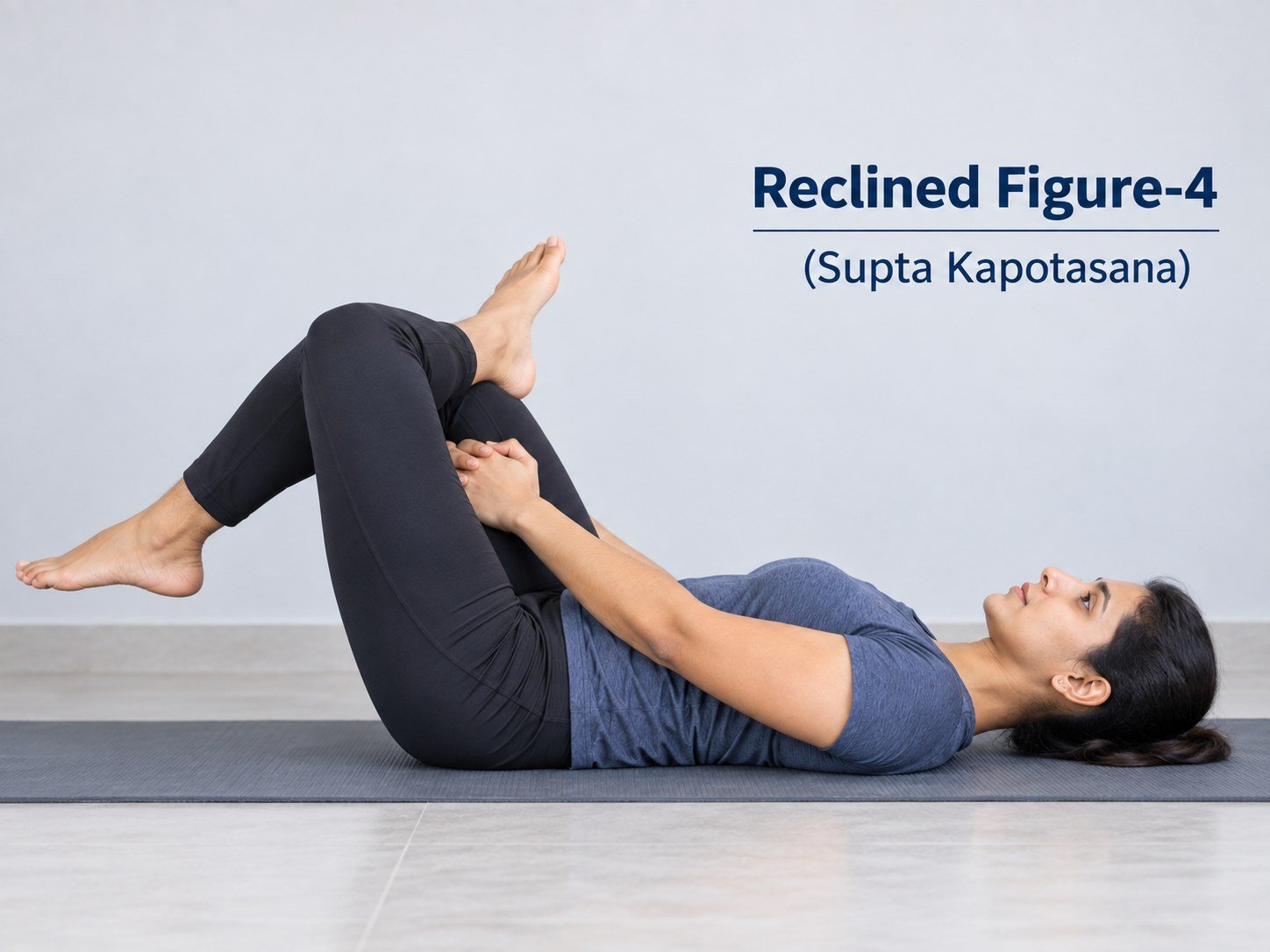
3. Reclined Figure-4 Stretch
3. रिक्लाइंड फिगर-4 स्ट्रेच
3. రిక్లైన్డ్ ఫిగర్-4 స్ట్రెచ్
Lie on your back, cross one ankle over the opposite knee, and gently pull the uncrossed thigh toward your chest. This is a gentler, better-controlled alternative to seated or prone Pigeon Pose — the same external-rotator stretch, with less strain on the knees and the hip joint itself.
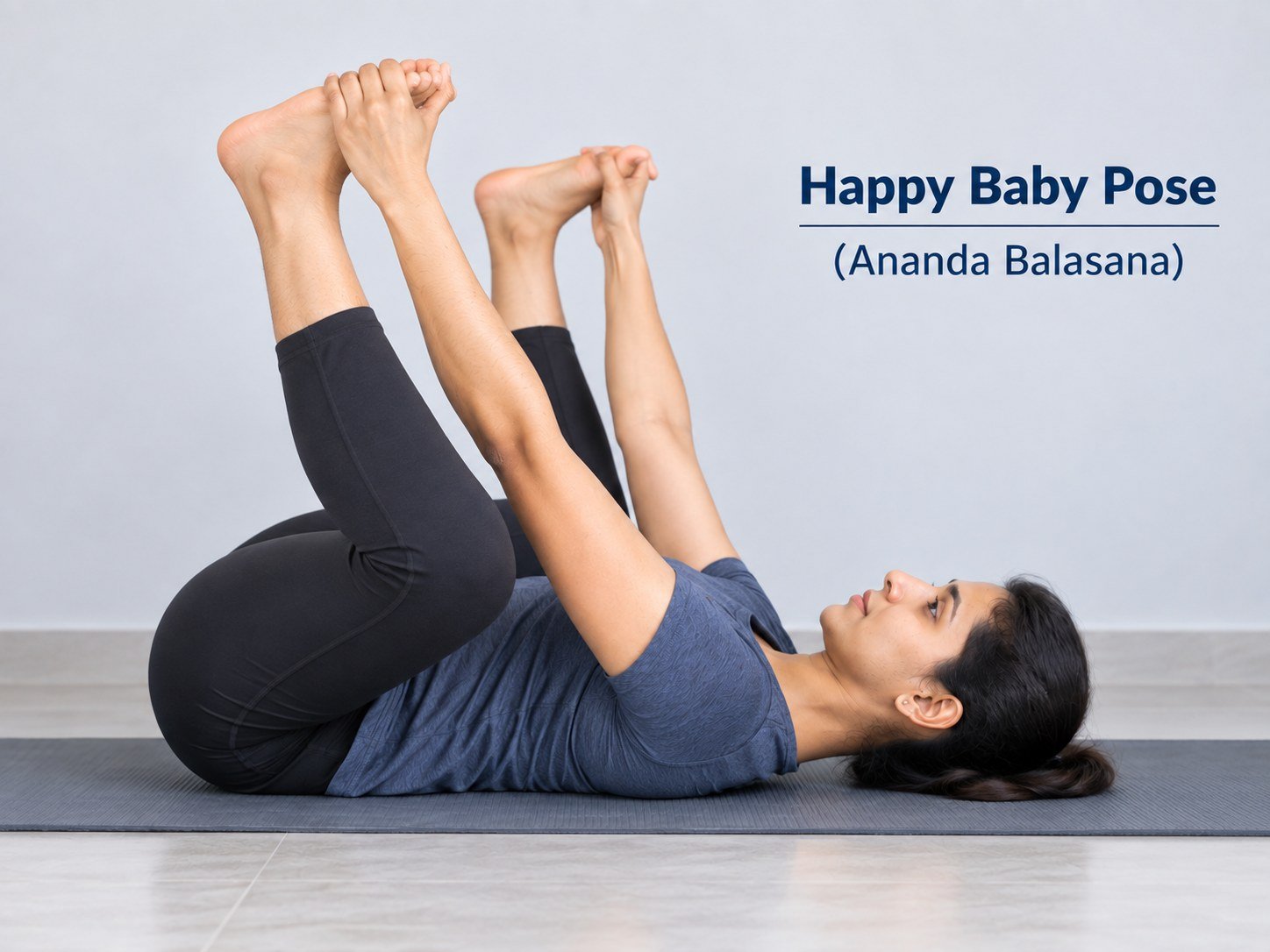
4. Happy Baby Pose (Ananda Balasana)
4. हैप्पी बेबी पोज़ (आनंद बालासन)
4. హ్యాపీ బేబీ భంగిమ (ఆనంద బాలాసనం)
Lying on your back, hold the outer edges of your feet with knees bent toward your armpits, gently rocking side to side. A gentle, supported way to work hip external rotation and abduction.
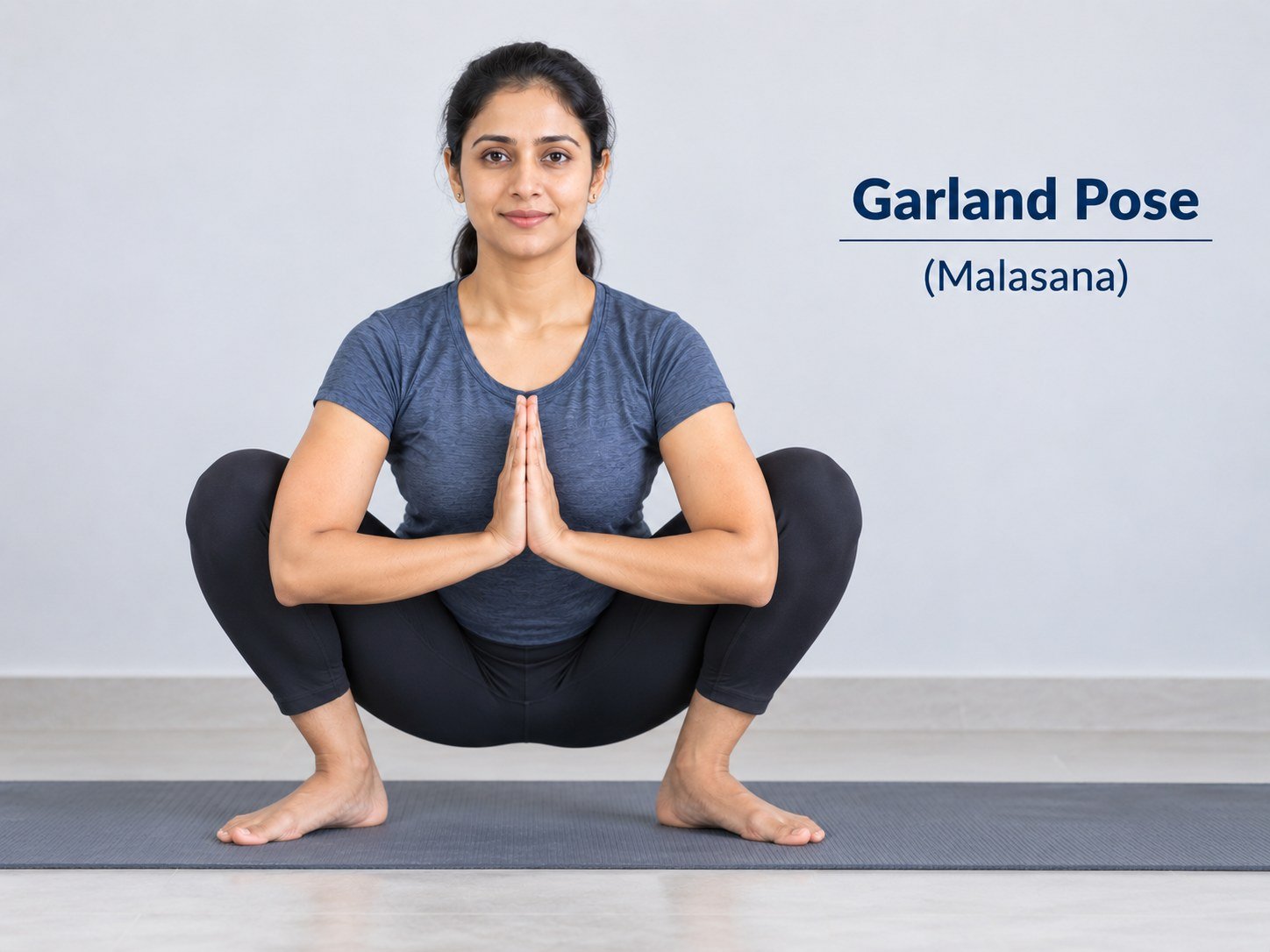
5. Garland Pose / Deep Squat (Malasana)
5. गारलैंड पोज़ / डीप स्क्वाट (मालासन)
5. గార్లాండ్ భంగిమ / డీప్ స్క్వాట్ (మలాసనం)
A deep squat with feet slightly wider than hip-width, hands pressed together at the chest to gently open the knees. This is the most demanding pose on this list for hip flexion and range — skip or modify it if you're under hip-replacement precautions, or if you have groin catching or locking symptoms, until you've been checked.
Want More Guided Exercises?
और मार्गदर्शित व्यायाम चाहिए?
మరిన్ని మార్గదర్శక వ్యాయామాలు కావాలా?
Condition-specific routines reviewed by Dr. Sumit
Dr. Sumit's Advice
डॉ. सुमित की सलाह
Dr. సుమిత్ సలహా
A grounded, clinical perspective
"Tight hips are one of the most common things people bring up in clinic, and most of the time, it's simply a sitting-and-lifestyle problem that responds well to consistent, gentle mobility work — no imaging or intervention needed. What I do want patients to be careful about is treating every hip symptom the same way. Catching, locking, groin pain that doesn't ease with rest, or stiffness after a hip replacement are a different category altogether, and pushing into deep stretches without a proper evaluation first can do more harm than good. My advice is simple: if it's ordinary stiffness, stretch consistently and build strength around the joint. If something feels different or off, get it looked at before you stretch it."
— Dr. Sumit Dubewar · DABRM (USA) · Secunderabad
Need Expert Advice?
विशेषज्ञ सलाह चाहिए?
నిపుణుల సలహా కావాలా?
Book a consultation with Dr. Sumit. Get an honest assessment and the right treatment plan.
Book Consultation 💬 WhatsApp