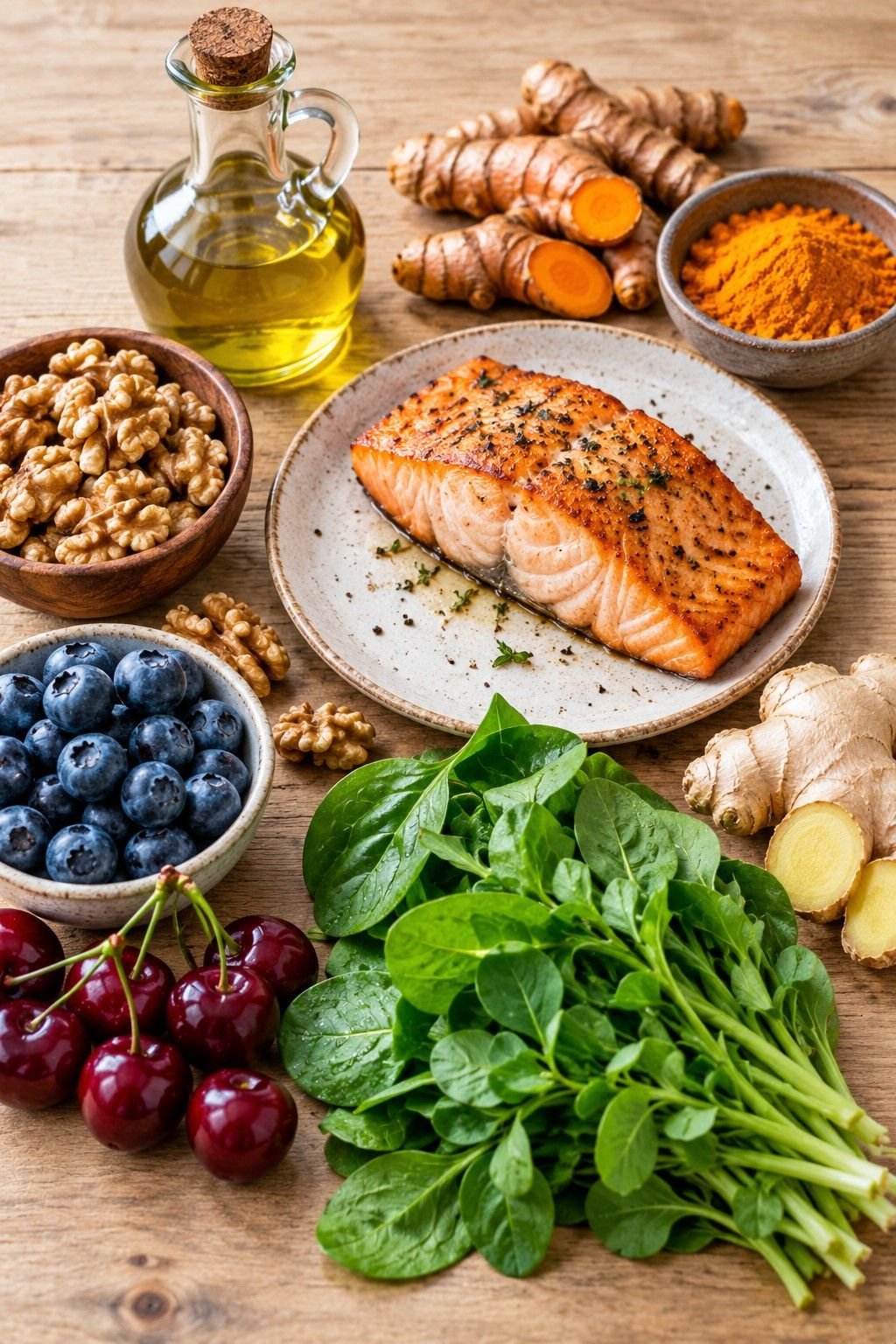
Why Does Diet Affect Joint Pain?
आहार जोड़ों के दर्द को क्यों प्रभावित करता है?
ఆహారం కీళ్ళ నొప్పిని ఎందుకు ప్రభావితం చేస్తుంది?
The science of inflammation and how food controls it
Osteoarthritis, rheumatoid arthritis and most joint pain conditions involve chronic low-grade inflammation — the immune system releasing inflammatory chemicals (cytokines like IL-6, TNF-alpha, and CRP) that damage cartilage and surrounding tissue over time.
🧬 Key insight: What you eat directly influences these inflammatory markers. A 2021 review in Nutrients found that a Mediterranean-style anti-inflammatory diet significantly reduced serum CRP (a key inflammation marker) in arthritis patients — comparable in effect to low-dose anti-inflammatory medication in some studies.
The good news: dietary changes show measurable effects in 6-12 weeks. You do not need to overhaul everything — specific, targeted changes to what you eat and avoid can meaningfully reduce joint inflammation.
Best Anti-Inflammatory Foods — Backed by Evidence
सर्वोत्तम एंटी-इंफ्लेमेटरी खाद्य पदार्थ
ఉత్తమ యాంటీ-ఇన్ఫ్లమేటరీ ఆహారాలు
Every food listed here has clinical trial or meta-analysis evidence
Fatty Fish
Omega-3 fatty acids (EPA and DHA)
Salmon, mackerel, sardines, tuna, rohu, bangda. Omega-3 directly inhibits the production of inflammatory prostaglandins and cytokines.
How much: 2-3 servings per week (150g per serving)
Meta-analysis — 52 RCTsTurmeric (Haldi)
Curcumin — inhibits NF-kB inflammatory pathway
500-1000mg curcumin daily. Must be taken with black pepper (piperine increases absorption by 2000%). Haldi milk, dal, sabzi with haldi.
Evidence: Equal to ibuprofen for knee OA pain in one RCT (Kuptniratsaikul 2014)
10 RCTs — Systematic Review 2021Extra Virgin Olive Oil
Oleocanthal — natural COX inhibitor (like ibuprofen)
Oleocanthal inhibits the same enzyme as ibuprofen. Use as cooking oil, salad dressing. Do not heat to smoking point.
How much: 2-3 tablespoons daily
Mediterranean Diet RCTs — Strong evidenceGinger (Adrak)
Gingerols — inhibit prostaglandin and leukotriene synthesis
Fresh ginger in tea, dal, sabzi. Ginger extract reduces knee pain and stiffness in OA patients.
How much: 1-2g fresh ginger daily
5 RCTs — Cochrane ReviewBerries and Cherries
Anthocyanins and polyphenols — reduce uric acid and CRP
Tart cherry juice reduces gout flares by 50% in one study. Blueberries, strawberries reduce CRP. Pomegranate juice shown to reduce OA cartilage degradation.
How much: 1 cup daily or 250ml tart cherry juice
Multiple RCTsLeafy Greens
Vitamin K, magnesium, antioxidants
Palak, methi, spinach, kale. Vitamin K2 found in green vegetables is essential for bone health and may slow cartilage degradation. Magnesium reduces CRP levels.
How much: 1-2 servings daily
Observational + Mechanistic EvidenceWalnuts
ALA omega-3, polyphenols — best plant-based omega-3
The best plant-based source of omega-3 (ALA). Also contains ellagic acid which has anti-inflammatory properties. Easy daily snack.
How much: 7-8 walnuts (28g) daily
RCT Evidence — Reduces CRPGreen Tea
EGCG (epigallocatechin gallate) — inhibits cartilage destruction
EGCG has been shown to inhibit MMP enzymes responsible for cartilage destruction. Also reduces TNF-alpha and IL-1 beta — key inflammatory cytokines in OA.
How much: 2-3 cups daily
In vitro + RCT Evidence⚠️ About supplements: Omega-3 fish oil capsules (1-2g EPA+DHA daily) and curcumin supplements (500-1000mg with piperine) are both evidence-backed additions if you cannot consistently eat these foods. Always inform Dr. Sumit of any supplements you take — omega-3 has blood-thinning effects relevant before surgery.
Foods That Worsen Joint Inflammation — Avoid These
जोड़ों की सूजन बढ़ाने वाले खाद्य पदार्थ
కీళ్ళ వాపు పెంచే ఆహారాలు
Evidence-based list of pro-inflammatory foods
❌ Refined Sugar and Sugary Drinks
Sugar directly triggers the release of inflammatory cytokines. Soft drinks, packaged juices, mithai, biscuits. Even one sugary drink per day significantly raises CRP levels.
❌ Refined Seed Oils
Sunflower, corn, soybean, and refined vegetable oil are high in omega-6 fatty acids which compete with omega-3 and promote inflammation. Widely used in Indian cooking — switch to olive oil or cold-pressed oils.
❌ Processed and Packaged Foods
Namkeen, chips, instant noodles, packaged snacks. High in trans fats, refined starch, and additives — all proven to raise inflammatory markers. Avoid daily consumption.
❌ Maida (Refined White Flour)
White bread, naan, paratha made from maida, biscuits, cakes. Refined carbohydrates spike blood sugar rapidly — triggering an inflammatory response. Switch to atta or multigrain.
❌ Excessive Red Meat
Arachidonic acid in red meat promotes inflammatory prostaglandin production. More than 3-4 servings per week is associated with higher inflammatory markers. Lean poultry and fish are better alternatives.
❌ Alcohol
Alcohol disrupts gut microbiome, increases intestinal permeability (leaky gut) and raises systemic inflammation. Beer specifically raises uric acid — directly worsening gout. Avoid if you have joint disease.
Indian Anti-Inflammatory Diet Plan — 3-Day Sample
भारतीय एंटी-इंफ्लेमेटरी डाइट प्लान — 3 दिन का नमूना
భారతీయ యాంటీ-ఇన్ఫ్లమేటరీ ఆహార ప్రణాళిక — 3 రోజుల నమూనా
Practical Indian meals designed around anti-inflammatory principles
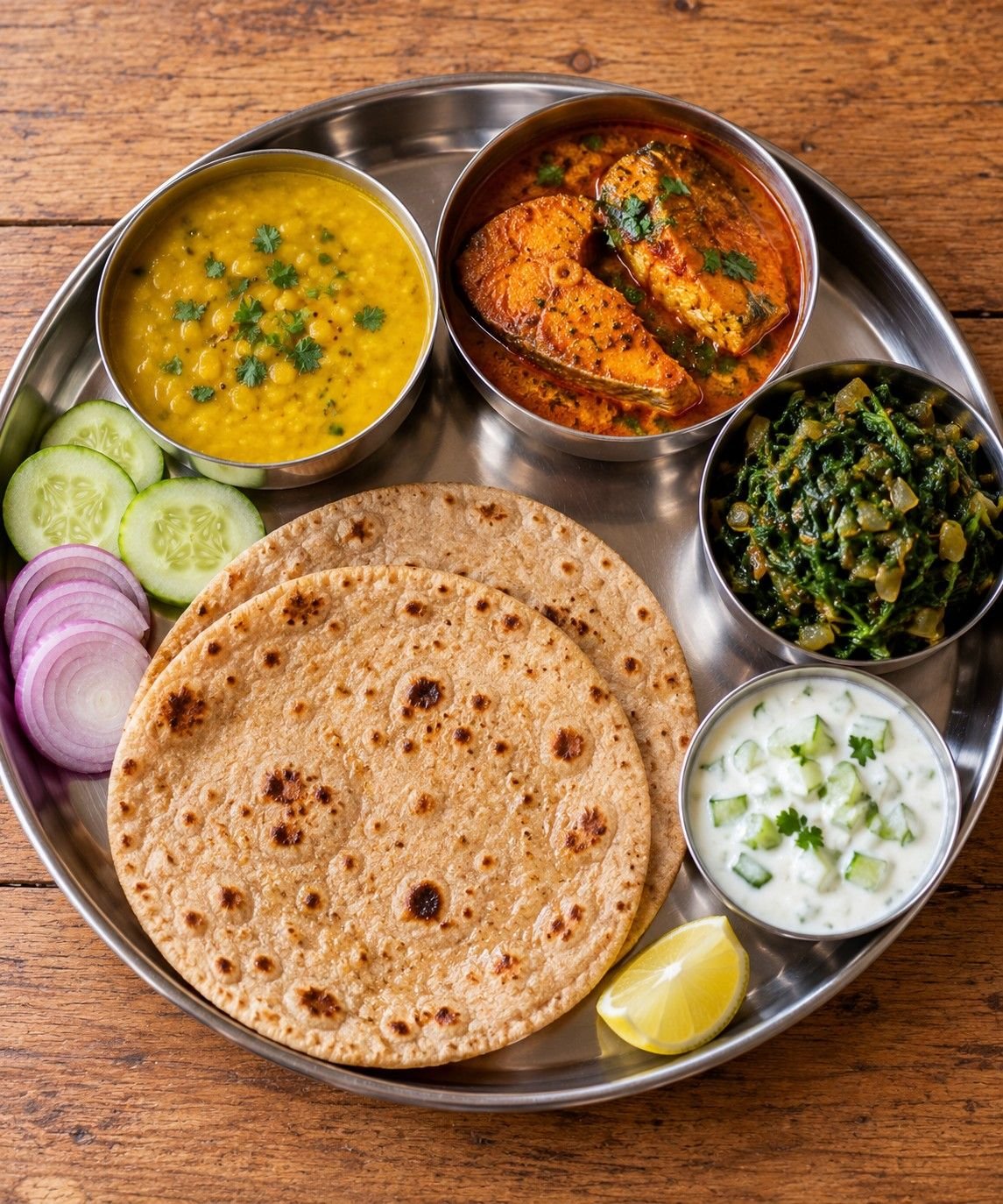
🇮🇳 Good news for Indian patients: India's traditional spices — turmeric, ginger, cumin, coriander, fenugreek — are among the most potent natural anti-inflammatory agents identified in research. Traditional Indian cooking, when not loaded with refined oil or sugar, is naturally anti-inflammatory.
This plan is a guide — not a prescription. Adapt to your food preferences and medical conditions. Patients with diabetes should monitor carbohydrate portions.
Evidence Summary — What the Research Shows
साक्ष्य सारांश — शोध क्या दिखाता है
ఆధార సారాంశం — పరిశోధన ఏమి చూపిస్తుంది
Clinical evidence for each anti-inflammatory food
| Food / Supplement | Active Compound | Evidence Level | Effect on Joints |
|---|---|---|---|
| Fatty Fish / Fish Oil | EPA, DHA (omega-3) | Meta-analysis 52 RCTs | Reduces IL-6, TNF-alpha, joint stiffness and morning pain in RA and OA |
| Turmeric / Curcumin | Curcumin | Systematic Review 10 RCTs | Reduces knee pain comparable to ibuprofen. Inhibits NF-kB inflammatory pathway |
| Extra Virgin Olive Oil | Oleocanthal, polyphenols | Multiple Mediterranean RCTs | COX inhibition similar to ibuprofen. Reduces CRP and oxidative stress |
| Ginger | Gingerols, Shogaols | Cochrane Review — 5 RCTs | Modest but significant reduction in knee OA pain and stiffness |
| Tart Cherry | Anthocyanins | Multiple RCTs | 50% reduction in gout flares. Reduces uric acid and CRP |
| Walnuts | ALA omega-3, ellagic acid | RCT Evidence | Reduces CRP and IL-6 in patients with inflammatory conditions |
| Green Tea | EGCG | In vitro + pilot RCTs | Inhibits MMP cartilage destruction enzymes. Reduces TNF-alpha and IL-1beta |
| Mediterranean Diet (overall) | Multiple compounds | Strongest Overall — Multiple RCTs | Significantly reduces CRP, IL-6, pain scores in OA and RA. Slows OA progression in some studies |
Frequently Asked Questions
अक्सर पूछे जाने वाले प्रश्न
తరచుగా అడిగే ప్రశ్నలు
Quick answers to the most common questions
Dr. Sumit's Advice on Diet and Joint Health
आहार और जोड़ों के स्वास्थ्य पर डॉ. सुमित की सलाह
ఆహారం మరియు కీళ్ళ ఆరోగ్యంపై Dr. సుమిత్ సలహా
What I tell every arthritic patient at the end of consultation
परामर्श के अंत में हर आर्थराइटिस मरीज को बताता हूं
సంప్రదింపు చివరిలో ప్రతి ఆర్థ్రైటిస్ రోగికి చెప్తాను
"Every patient I treat for knee or joint pain — whether I give them PRP, BMAC or even surgery — I tell them the same thing at the end: your joint lives inside your body, and your body is made of what you eat. You can spend lakhs on the best regenerative treatment, but if you go home and continue eating packaged food, soft drinks and refined oil every day, you are adding fuel to the very fire we are trying to put out. The changes are not complicated. Start with three things: haldi doodh every night, replace sunflower oil with cold-pressed oil, and eat fish twice a week. Those three changes alone, done consistently for three months, will reduce your joint inflammation measurably."
"जो भी मरीज मेरे पास आता है — PRP, BMAC या सर्जरी के बाद — मैं सबको यही कहता हूं: आपका जोड़ आपके शरीर के अंदर रहता है, और शरीर वही है जो आप खाते हैं। तीन काम करें: हर रात हल्दी दूध, सूरजमुखी तेल को कोल्ड-प्रेस्ड से बदलें, हफ्ते में दो बार मछली खाएं। तीन महीने में फर्क दिखेगा।"
"మోకాలి లేదా కీళ్ళ నొప్పికి నేను చికిత్స చేసే ప్రతి రోగికి చెప్తాను: మీ కీళ్ళు మీ శరీరంలో నివసిస్తాయి, మీరు తినే దానితో మీ శరీరం నిర్మించబడుతుంది. మూడు పనులు చేయండి: రాత్రి హల్దీ దూద్, సన్ఫ్లవర్ ఆయిల్ను కోల్డ్-ప్రెస్డ్తో మార్చండి, వారంలో రెండుసార్లు చేపలు తినండి. మూడు నెలల్లో తేడా కనిపిస్తుంది."
— Dr. Sumit Dubewar · DABRM (USA) · OrthoRegen Clinic · Secunderabad
Consultation Information
परामर्श जानकारी
సంప్రదింపు సమాచారం
Dr. Sumit Dubewar consults at ONE Healthcare Clinic, Tirumalagiri, Secunderabad. Phone: +91 9370498182.
Clinic Appointments