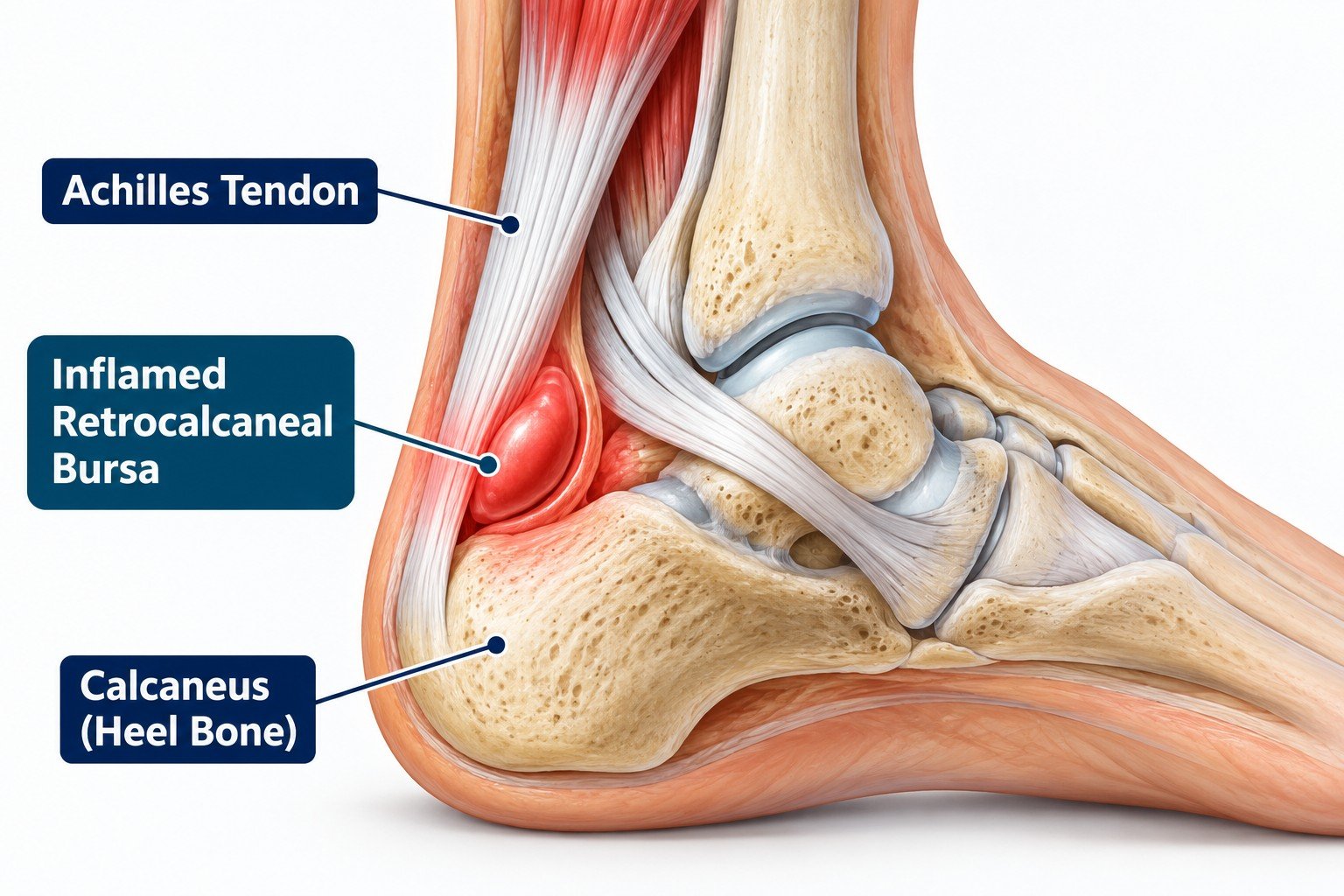
The retrocalcaneal bursa cushions the Achilles tendon against the heel bone — in this condition, it becomes irritated and swollen.
What Causes It?
यह किस कारण होता है?
దీనికి కారణం ఏమిటి?
Overuse, footwear, and foot structure are the usual drivers
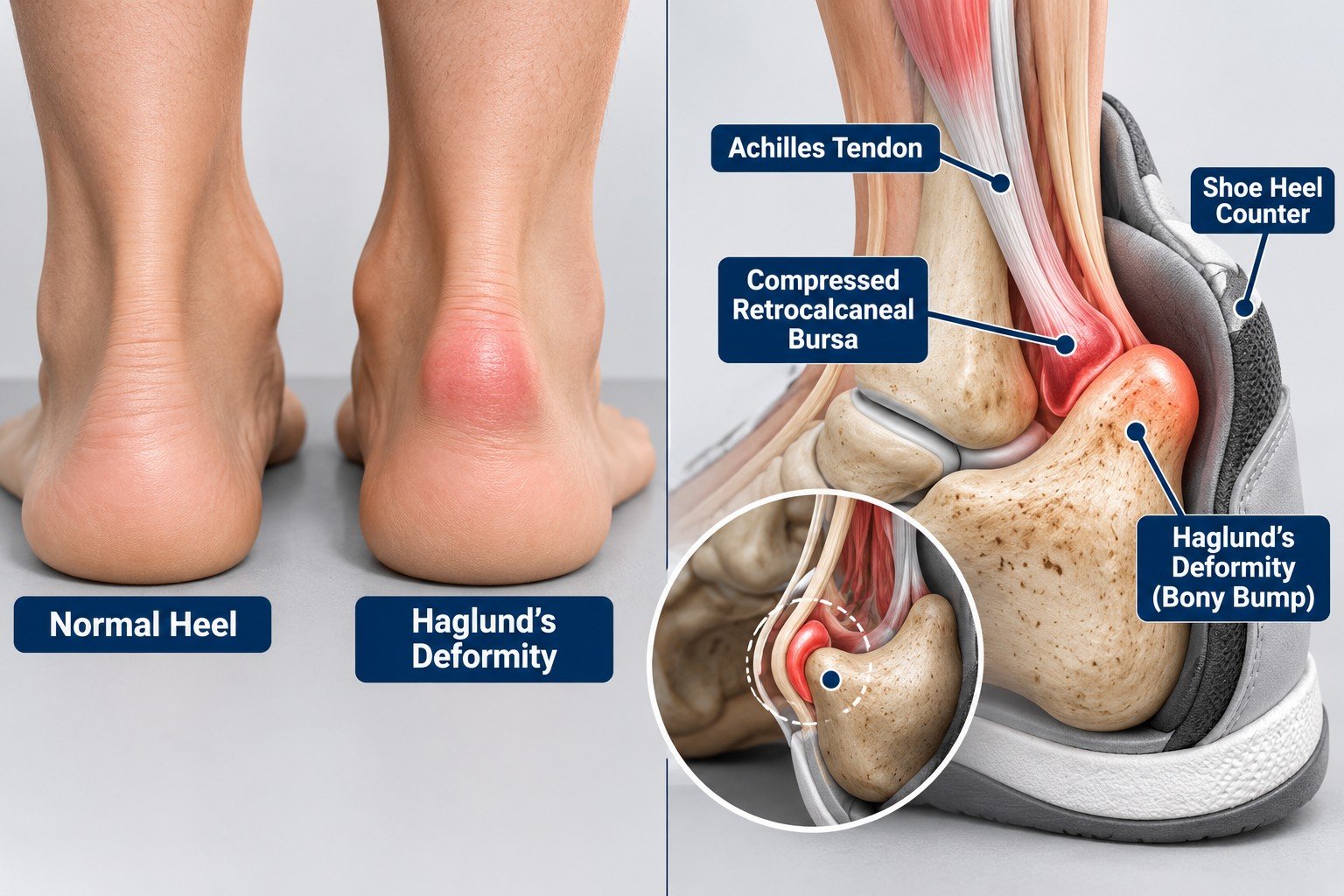
Haglund's deformity — an excessively prominent heel bone — reduces the space available for the bursa and is a common underlying cause.
- Overuse and excessive ankle loading — especially increasing running volume or intensity too quickly without enough recovery
- Poorly fitting shoes with rigid heel counters that rub and compress the back of the heel
- Tight calf muscles — restrict ankle movement and intensify compression on the bursa during walking or running
- Haglund's deformity — an excessively prominent heel bone that leaves less room for the bursa
- Poor foot biomechanics — high arches or excessive pronation that alter how load passes through the heel
- Inflammatory conditions or direct trauma — rheumatoid arthritis, gout, a direct knock to the heel, or an abrupt change in footwear
Symptoms
लक्षण
లక్షణాలు
Recognizing the pattern — and when it needs urgent attention
- Deep, throbbing pain at the back of the heel, right where the Achilles tendon attaches
- Worse with push-off — climbing stairs, standing on your toes, or shoe pressure on the heel
- A distinct pattern — worse at the start of activity, eases as you warm up, then returns after you cool down
- Swelling and warmth felt on either side of the Achilles tendon, not directly on it
- Tenderness when squeezing the sides of the lower tendon — tenderness directly on the tendon itself usually points to tendinitis instead
⚠️ Seek urgent care if: you notice redness, increasing warmth, fever, or generally feel unwell — these point to infection, not simple bursitis.
Treatment Options
उपचार के विकल्प
చికిత్స ఎంపికలు
From simple home care to specialist treatment
Treatment Options (First-Line)
उपचार के विकल्प (प्राथमिक)
చికిత్స ఎంపికలు (మొదటి-వరుస)
- Rest and short periods of icing — taking a break from the activities that worsen symptoms
- Footwear changes — switching to shoes without a stiff heel counter
- A heel lift inside the shoe — can reduce compression on the bursa in the short term
- Calf stretching and guided strengthening — the backbone of recovery, progressing gradually under a physiotherapist's guidance
- Shockwave therapy — energy waves directed at the inflamed area and tight calf tissue to ease symptoms and restore motion
- Custom orthoses — when foot mechanics are driving the compression, these redistribute pressure away from the back of the heel
If Conservative Treatment Fails
जब रूढ़िवादी उपचार असफल हो जाए
సంప్రదాయ చికిత్స విఫలమైతే
- An injection may be considered, but only carefully, at the Achilles insertion, after assessing whether it's appropriate
- Surgery — reserved for cases that don't improve after months of consistent conservative care; involves removing the inflamed bursa, and reshaping the bone if Haglund's deformity is present
- Recovery typically means a few weeks off weight-bearing, then a walking boot, then physiotherapy — most patients return to daily life within a couple of months, though sport takes longer
Exercises
व्यायाम
వ్యాయామాలు
Calf stretching and strengthening form the backbone of recovery
Gentle calf stretching, progressing to guided strengthening under a physiotherapist's supervision, gradually reduces the compression on the bursa and builds the heel's tolerance to load.
Calf & Heel Exercise Library
पिंडली और एड़ी एक्सरसाइज लाइब्रेरी
పిండికాలు మరియు మడమ వ్యాయామ లైబ్రరీ
Guided exercises to support recovery
Dr. Sumit's Advice
डॉ. सुमित की सलाह
Dr. సుమిత్ సలహా
The mistake I see most often with this condition
"Patients often assume heel pain at the back is the same as plantar fasciitis under the foot, and treat it the same way — that's the most common mistake I see. Retrocalcaneal bursitis responds to a very different approach: calf flexibility and footwear changes matter far more here than foot-sole stretches. Get the shoe and the calf right early, and most patients avoid injections or surgery altogether."
— Dr. Sumit Dubewar · DABRM (USA) · Secunderabad
Need Expert Advice?
विशेषज्ञ सलाह चाहिए?
నిపుణుల సలహా కావాలా?
Book a consultation with Dr. Sumit. Get an honest assessment and the right treatment plan for your condition.
Book Consultation 💬 WhatsApp